
Bigg Boss 19 has once again proven that the drama inside the house doesn’t stay confined to the walls—it resonates far beyond, reaching fans, social media, and even the families of contestants. Recently, Shehbaz’s father, Santokh Singh, broke his silence, offering candid remarks on several of the season’s most talked-about incidents. His commentary touched on Amaal’s controversial behavior toward female contestants, Gaurav’s captaincy, and the ongoing tension between Farhana and Tanya. For viewers, this provided a rare and insightful perspective, revealing how families perceive the high-stakes dynamics inside the Bigg Boss house.
Santokh Singh began by addressing Amaal’s behavior, which had sparked widespread discussion online. According to him, the inappropriate remarks and actions directed toward female contestants were unacceptable and created tension not only among housemates but also among fans watching at home. His comments underscored the importance of respect and proper conduct, emphasizing that contestants must remember the boundaries even in a competitive environment. Santokh’s perspective resonated with viewers, many of whom had been vocally criticizing Amaal, reinforcing the widespread concern about the impact of such behavior on both interpersonal relationships and public perception.
Moving on to Gaurav’s captaincy, Santokh offered his opinion on the young contestant’s leadership skills. He acknowledged the challenges of holding a position of authority in such a high-pressure environment and praised Gaurav for attempting to balance fairness with strategic gameplay. At the same time, he didn’t shy away from highlighting areas where Gaurav could improve, particularly in managing conflicts and ensuring all contestants felt heard and respected. His observations provided fans with a nuanced perspective, blending admiration with constructive critique, and reminding everyone that leadership in Bigg Boss is as much about emotional intelligence as it is about decision-making.
The tension between Farhana and Tanya was another topic Santokh spoke about in detail. He noted that while disagreements are inevitable in a competitive house, how contestants handle them defines their character. He praised Tanya for maintaining her composure and responding to conflicts with dignity, even when provoked. According to Santokh, Tanya’s ability to navigate these situations without escalating drama demonstrated maturity and emotional strength, qualities that earned her respect both inside the house and among fans online. His comments highlighted how external observers often focus on the contestants’ behavior through the lens of values, empathy, and integrity, adding depth to the way audiences interpret the unfolding drama.
Santokh’s insights were not only personal observations but also a reflection of the broader fan sentiment. His remarks quickly circulated on social media, triggering waves of discussion and debate. Fans dissected his opinions, agreeing, questioning, or elaborating on each point he raised. The commentary on Amaal’s behavior reignited debates about accountability, while his praise of Tanya and Gaurav offered validation to viewers who had been following their journey closely. In a way, Santokh Singh became a voice of reason outside the house, providing clarity and perspective in a season filled with high tension, emotional outbursts, and unpredictable dynamics.
His commentary also shed light on how families perceive the pressures of Bigg Boss. Being a part of the show is not only about competition; it also involves public scrutiny and emotional exposure. Parents and relatives watch their children navigate a unique environment where alliances shift, tempers flare, and personal moments are broadcast to millions. Santokh’s reflections emphasized that families often hold an intricate understanding of the stakes involved, balancing pride with concern, and admiration with critical awareness. For viewers, this insight added an extra layer of depth to the way house dynamics were being interpreted.
Beyond individual behavior, Santokh Singh touched on the broader implications of these controversies. He suggested that how contestants handle criticism, conflicts, and public attention can influence not only their trajectory in the game but also their reputation outside the house. His remarks highlighted the delicate balance each participant must maintain—between strategy and morality, assertiveness and diplomacy, and personal authenticity versus performative actions. These observations provided fans with a richer understanding of the social and psychological dynamics at play in Bigg Boss 19, framing the drama as more than mere entertainment.
For Tanya and Farhana, Santokh’s perspective reinforced the narrative of resilience versus provocation. He emphasized that while conflict is natural in the house, the way contestants respond can define the season’s tone. Tanya’s ability to remain composed amidst tension, according to him, was a testament to her strength of character and emotional intelligence. This perspective offered fans an external validation of their support for Tanya, further boosting her profile and encouraging viewers to pay closer attention to her strategic and social acumen.
Regarding Gaurav, Santokh’s comments illuminated the pressures of leadership in the Bigg Boss environment. Being captain is more than a title—it requires conflict resolution, decision-making, and the ability to earn the respect of peers. His observations suggested that Gaurav was navigating this challenge with determination, learning from mistakes while striving to maintain fairness. This assessment provided audiences with an understanding of the complexities behind house leadership, revealing that the role requires both empathy and tactical awareness in equal measure.
The response from fans was immediate and enthusiastic. Social media lit up with analysis of Santokh Singh’s statements, with discussions ranging from Amaal’s accountability to Tanya’s resilience and Gaurav’s leadership style. Clips and quotes circulated widely, prompting debates about fairness, emotional intelligence, and strategic gameplay. In this way, Santokh’s perspective not only provided context but also enriched the public narrative, merging the house’s internal drama with external engagement and public discourse.
Ultimately, Santokh Singh’s insights offered a rare and compelling look at Bigg Boss 19 from an outsider’s perspective. He addressed the controversies head-on, praised resilience where it was due, and offered constructive critique on leadership and behavior. For viewers, his commentary provided a lens through which to interpret the season’s unfolding drama, blending emotional, social, and strategic considerations. His voice reinforced the idea that Bigg Boss is not only about competition—it is also about character, integrity, and how contestants navigate complex human interactions under intense scrutiny.
By the end of his statements, it was clear that Santokh Singh’s perspective would resonate with both housemates and viewers. His remarks highlighted key personalities, underscored the consequences of behavior, and emphasized the role of emotional intelligence in navigating conflicts. As the season progresses, the implications of his observations are likely to influence both audience perception and house dynamics, making this commentary a pivotal part of the Bigg Boss 19 narrative.
The reactions to Santokh Singh’s statements were swift and powerful, both online and among the Bigg Boss 19 audience. Fans immediately took to social media to analyze his comments, dissecting each observation with precision. Many applauded his candid perspective, praising him for highlighting Amaal’s inappropriate behavior while also acknowledging the strengths of Tanya and Gaurav. Tweets and posts flooded timelines, with fans debating every nuance of his critique and support. The intensity of the fan engagement demonstrated how a single family member’s perspective could amplify drama and shift public attention to specific house dynamics.
Celebrity reactions added another layer of excitement. Well-known personalities in the entertainment industry joined the conversation, weighing in on Santokh Singh’s observations. Some supported his praise for Tanya’s composure, emphasizing how emotional intelligence is just as vital as strategy in the Bigg Boss house. Others commented on Gaurav’s captaincy, discussing the pressures of leadership and the challenges of balancing fairness with competitiveness. The combined voices of fans and celebrities turned what might have been an isolated external opinion into a broader cultural moment, blending social media discourse with house dynamics.
Inside the house, the impact of these external reactions was palpable. Contestants are aware that public perception matters as much as their interactions within the house. Tanya, already praised for her poise, received additional validation, strengthening her confidence and subtly influencing her social positioning. Gaurav, too, seemed to recognize the weight of public scrutiny, which likely encouraged him to approach his captaincy with a more careful and deliberate strategy. Even contestants not directly involved in the controversies watched and adjusted their behavior, understanding that fan and celebrity attention could affect alliances, task outcomes, and the overall social climate.
The Santokh Singh commentary also sparked discussions about morality, fairness, and strategic awareness within the house. Amaal’s conduct, particularly in moments deemed inappropriate, became a subject of reflection among contestants. Some considered how such behavior could jeopardize their public image and influence potential fan support. Tanya and Farhana’s interactions were observed with even more focus, as housemates weighed not just personal dynamics but also the external narrative being shaped by social media and celebrity opinions. This created a subtle shift in the house atmosphere, where emotional intelligence, public perception, and strategy were interlinked in an intricate web of influence.
Online, fan communities flourished around Santokh Singh’s statements. Videos of his interview circulated with thousands of shares and comments, sparking debate over Amaal’s accountability, Tanya’s resilience, and Gaurav’s leadership style. Memes, reaction videos, and detailed threads analyzing his remarks proliferated, demonstrating how engaged the audience had become. Fans discussed potential outcomes, speculated on upcoming conflicts, and predicted shifts in alliances, showing that even an external perspective could shape the narrative of the house and influence contestant behavior.
The commentary also reinforced the significance of family influence on Bigg Boss contestants. Families are not merely observers; their perspectives can validate, motivate, and sometimes challenge the decisions of those inside the house. Santokh Singh’s statements provided guidance in a subtle yet impactful way, reminding viewers and contestants alike that public accountability and familial insight are critical in a game that combines strategy, social dynamics, and emotional endurance. His words highlighted the delicate balance each contestant must maintain between personal values, public perception, and competitive gameplay.
As the days passed, the combination of celebrity support, fan engagement, and external commentary began to reshape the social landscape of Bigg Boss 19. Tanya’s position was reinforced, with housemates showing increased respect and attentiveness toward her. Gaurav’s leadership, now under additional scrutiny, became more calculated and deliberate. Even minor interactions were influenced by the awareness that every action could be interpreted through the lens of public opinion, celebrity commentary, and fan discussions, demonstrating the pervasive power of external voices in the Bigg Boss ecosystem.
Looking forward, the Santokh Singh commentary set the stage for potential new drama. Housemates may test Tanya’s resilience, challenge Gaurav’s authority, or strategize around Amaal’s behavior to create tension or gain advantage. The knowledge that fan and celebrity support can sway perception adds a layer of complexity, influencing decisions and interactions in subtle but significant ways. This dynamic underscores a fundamental reality of Bigg Boss 19: success depends not only on winning tasks or forming alliances but also on navigating external narratives, public sentiment, and the intricate balance of character and strategy.
Ultimately, the insights offered by Santokh Singh provided a multi-dimensional understanding of Bigg Boss 19. They illustrated how family perspectives can intersect with house dynamics, how external validation can reinforce confidence, and how public discourse shapes the season’s unfolding narrative. Tanya, Gaurav, and even Amaal were seen through a broader lens, highlighting the interplay between internal behavior, strategic gameplay, and audience perception. This episode reinforced that Bigg Boss 19 is as much a game of emotional intelligence and social awareness as it is of competition, and that external voices—fans, celebrities, and family members—can wield tremendous influence over the course of the season.
In the days following Santokh Singh’s candid remarks, the Bigg Boss 19 house seemed to resonate with the echoes of his perspective. Tanya Mittal, already lauded for her poise, appeared more confident, subtly influencing her interactions with other contestants. Her reinforced position highlighted the power of external validation, showing that the support of family, celebrities, and fans could translate into both psychological strength and strategic advantage. Housemates began to navigate the social landscape with heightened awareness, recognizing that public perception could shape not only alliances but also the trajectory of the game.
Gaurav’s captaincy also felt the ripple effects. Santokh Singh’s observations on leadership placed subtle pressure on him to refine his approach. He had to balance authority with empathy, ensuring fairness while maintaining his strategic stance. The awareness that his decisions were being discussed publicly, and scrutinized by families and fans, influenced his tactics and interpersonal engagement. In a house where perception and influence can shift outcomes, Gaurav’s navigation of this dual pressure—internal dynamics and external commentary—became a defining element of his gameplay.
The incident surrounding Amaal gained renewed attention as well. Santokh Singh’s critique of inappropriate behavior created a social mirror, reflecting the consequences of actions beyond the house. Contestants became increasingly conscious of how their conduct might affect public perception, leading to more calculated and measured behavior in subsequent interactions. This awareness subtly redefined social dynamics, where emotional intelligence and decorum were elevated alongside strategy, creating a more layered and cautious environment inside the house.
The Farhana-Tanya tension also evolved in this new context. Tanya’s strengthened confidence, amplified by external support, positioned her not only as a resilient contestant but also as a subtle influencer within the house. Farhana and other contestants were compelled to reconsider their approach, balancing confrontation with diplomacy in light of Tanya’s elevated social and public standing. The dynamics between these contestants became a microcosm of how perception, strategy, and external validation intersect in Bigg Boss 19, demonstrating that even minor conflicts can carry significant implications when viewed through multiple lenses.
Fan engagement continued to shape the narrative. Social media remained active, analyzing every interaction, debate, and alliance shift. Support for Tanya, praise for Gaurav’s captaincy efforts, and critique of Amaal’s conduct created a feedback loop that influenced both the viewers’ perception and the contestants’ awareness of their image. The interplay between internal strategy and external sentiment reinforced the unique nature of Bigg Boss 19, where audience, celebrity, and family voices hold tangible weight in shaping the game.
Looking forward, the implications of Santokh Singh’s commentary suggest a season filled with evolving alliances and intensified strategic maneuvering. Contestants may test Tanya’s resilience, challenge Gaurav’s leadership, or seek to capitalize on Amaal’s heightened scrutiny to shift power balances. The awareness that every action resonates externally ensures that both personal behavior and tactical decisions carry amplified significance. As the season progresses, the convergence of in-house dynamics and external perspectives promises further drama, heightened strategy, and emotionally charged interactions.
Ultimately, the statements of Santokh Singh exemplify the layered complexity of Bigg Boss 19. They demonstrate how family insight, public validation, and celebrity influence intersect with in-house behavior, shaping perceptions, alliances, and strategy. Tanya Mittal’s strengthened position, Gaurav’s refined approach to leadership, and the recalibrated dynamics surrounding Amaal reflect the lasting impact of external commentary on the season’s trajectory. In this environment, emotional intelligence, dignity, and public perception prove as pivotal as gameplay, underscoring that in Bigg Boss 19, every action resonates far beyond the immediate moment.
By the conclusion of this phase, it became clear that external voices—including Santokh Singh—play a decisive role in shaping both the narrative and the psychology of contestants. Tanya’s resilience, Gaurav’s evolving captaincy, and Amaal’s heightened accountability are now intertwined with audience perception and celebrity commentary. The season continues to illustrate that success in Bigg Boss is not only about winning tasks or forming alliances but also about navigating the delicate interplay of personal behavior, public opinion, and external influence. The house, already a crucible of strategy and emotion, has become a stage where family insight and social validation hold the power to redefine the course of the game.
News
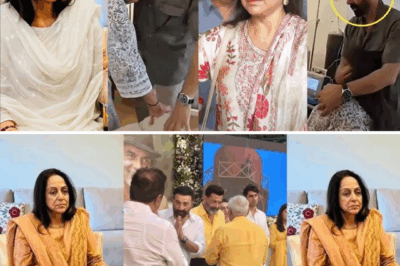
Hema Ji Breaks Silence After Dharmendra’s Passing: Social Media Reacts to Emotional Posts
The world paused for a moment when the news of Dharmendra’s passing spread. Bollywood’s “He-Man,” a figure larger than life,…

Hema Malini Health Rumors Rise After Dharmendra’s Hospital Scare: What’s Really Happening?
The first whispers came quietly, almost like a shadow sliding across the walls of social media. Hema Malini, the timeless…
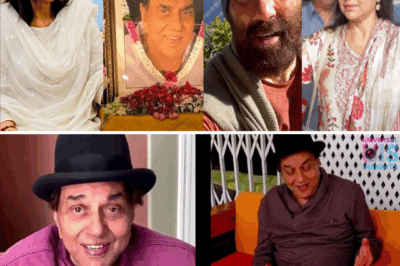
A Quiet Ritual, A Shattered Heart: What Really Stopped Hema Malini at Dharmendra’s Side?
Hema Malini had lived a life in the public eye for more than five decades, but nothing prepared her for…

Bigg Boss 19 Episode 100: Tanya Sparks Intense Fight With Gaurav
Bigg Boss 19 Episode 100, airing on 1st December 2025, marked a milestone not only because it was the 100th…
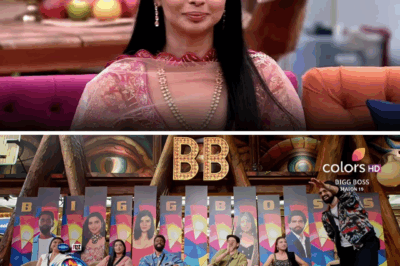
Bigg Boss 19 Promo 1st December 2025: Contestants Face Media Questions Live
Bigg Boss 19 reached a new milestone with Episode 100, airing on 1st December 2025, and fans were treated to…
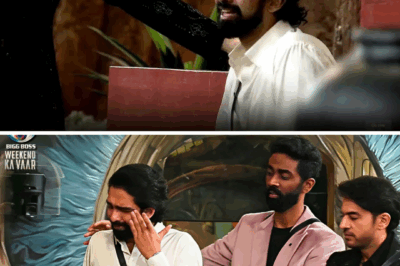
Bigg Boss 19 Drama: Amaal Malik Cries After Shehbaz Badesha Evicted
The Bigg Boss 19 house was filled with tension and anticipation as Shehbaz Badesha’s eviction was announced. While many contestants…
End of content
No more pages to load