
The Philippine Atmospheric, Geophysical and Astronomical Services Administration (PAGASA) has issued a stark warning for residents in multiple coastal regions across the Philippines, highlighting the imminent threat posed by storm surges, locally known as “daluyong,” fueled by the approaching Typhoon Tino. These surges are expected to bring dangerous waves capable of sweeping away coastal communities and endangering lives if immediate precautions are not taken.
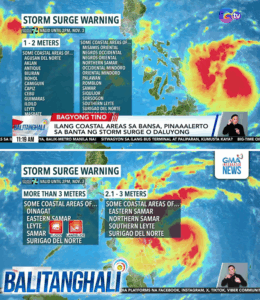
According to PAGASA, certain areas face extremely high risks, with storm surges predicted to exceed three meters. Critical zones include bays and coastal stretches in Dinagat, Eastern Samar, Leyte, Samar, and Surigao del Norte. Local authorities and residents in these regions are urged to act with urgency, evacuating to higher ground and avoiding the coastline at all costs. Officials stress that even a momentary delay could put lives at serious risk.
Other provinces are forecasted to face slightly lower yet still perilous surges ranging from 2.1 to 3 meters. Coastal communities in additional parts of Eastern Samar, Northern Samar, Southern Leyte, and Surigao del Norte fall within this moderate-high risk bracket. The agency reminds residents that waves of this height are sufficient to flood homes, damage infrastructure, and cause maritime hazards.
A broader set of provinces is expected to experience storm surges between 1 and 2 meters. Areas including Agusan del Norte, Aklan, Antique, Biliran, Bohol, Camiguin, Capiz, Cebu, Guimaras, Iloilo, Leyte, Masbate, Misamis Oriental, Negros Provinces, Northern Samar, Mindoro Provinces, Palawan, Romblon, Samar, Siquijor, Sorsogon, Southern Leyte, and Surigao Provinces should remain vigilant. While these surges may appear smaller, they are more than capable of causing coastal flooding and structural damage. Residents are urged to monitor local advisories and prepare for rapid evacuation if necessary.
PAGASA has emphasized three critical measures for all at-risk residents: avoid going out to sea to prevent maritime accidents, stay away from the immediate coastline to reduce exposure to powerful waves, and evacuate to safer, higher ground without delay. Local government units are coordinating evacuation and rescue operations, and residents are encouraged to cooperate fully with authorities.
The agency’s warning serves as a reminder that typhoon-related hazards extend beyond heavy rain and strong winds. Storm surges often strike with little notice, traveling at high speed and carrying immense force capable of destroying homes, roads, and even lives. Communities along the Philippine archipelago’s eastern and coastal fronts must prepare, ensuring that vulnerable families, the elderly, and children are moved to secure locations.
Typhoon Tino is projected to maintain significant strength as it approaches the eastern seaboard, and meteorologists caution that waves and strong currents may intensify unexpectedly. Residents are urged to remain indoors, avoid risky shortcuts, and follow real-time updates from PAGASA and local authorities. Emergency kits, provisions, and communication tools should be ready in advance, as immediate evacuation may become necessary without prior notice.
Maritime operators and fisherfolk are particularly at risk. PAGASA has explicitly warned that venturing into the sea could be fatal. Fishing boats, small vessels, and even larger ships could be overturned or carried away by sudden surges, and residents are reminded that no economic gain is worth the potential loss of life.
Community leaders are coordinating with disaster risk reduction and management offices to ensure that evacuation centers are ready and equipped to accommodate incoming residents. Shelters are stocked with basic necessities, but residents should bring essential belongings, personal identification, and health supplies to ensure safety and comfort during displacement.
For those in low-lying areas, immediate action is crucial. The agency notes that historical storm surges of similar magnitude have caused devastating damage in the Philippines, often claiming lives and destroying livelihoods. Typhoon Tino’s accompanying daluyong represents a comparable threat, emphasizing the need for proactive measures rather than reactive responses.
In conclusion, PAGASA urges all residents in affected areas to take the warning seriously, prioritize the safety of themselves and their families, and act without delay. The combination of strong winds, heavy rain, and dangerous storm surges requires vigilance and compliance with official directives. The lives of thousands depend on timely action and preparedness as Typhoon Tino advances toward the country’s eastern and coastal regions.
News

Taliwas sa Hamon: Ang Biglaang Paglaho ni Senador Bato dela Rosa sa Gitna ng ICC Arrest Warrant at Ang Galit ng Senado sa Kanyang Pagliban
Ang Labanan ng Salita at Katotohanan: Bakit Ngayon Nagtatago si Senador Bato dela Rosa sa Gitna ng Pagsisimula ng Pag-aresto…

National Emergency: Ang Viral na Paratang Tungkol sa Pangulo, Ang ‘Bombshell Revelation’ ni Senador Imee, at ang Panawagan para sa Pag-upo ni VP Sara Duterte
Ang pulitika ng Pilipinas ay laging puno ng drama at kontrobersya, ngunit bihira sa kasaysayan ang isang sitwasyon na nagdulot…

Ultimate Crush Revealed: Ang Matinding Kilig at Haka-haka sa Pagitan nina Eman Pacquiao at Jillian Ward na Nag-apoy sa Social Media
Ang mundo ng Philippine Showbiz ay walang humpay sa mga kuwentong nagdudulot ng kilig at kontrobersya. Ngunit bihira sa mga…

Ang Kalamansi at ang Lihim na Mensahe: Paano Nakatakas ang Magkakaibigan sa Pista ng mga Aswang sa Sorsogon
Ang mga kuwento ng mga aswang ay matagal nang bahagi ng folklore ng Pilipinas, ngunit madalas itong itinuturing na myth…

Ang Amnesiac na Tagapagmana: Paano Iniligtas ng Simpleng Magsasaka ang Babaeng May Marka ng Korona Mula sa Tiyuhin na Pumatay sa Kanyang Tunay na Ina
Ang buhay ay minsan parang isang telenobela, puno ng kasakiman, pagtataksil, at pag-ibig na sumisibol sa pinaka-hindi inaasahang lugar. Sa…

Ang Maling Sakay: Paano Sinalubong ng Isang Buong Baryo ng Aswang ang Magkakaibigan sa Halip na Pista ni Orland
Ang mga kuwento tungkol sa mga aswang ay matagal nang bahagi ng kultura at pananampalataya ng mga Pilipino. Kadalasan, ang…
End of content
No more pages to load