President Ferdinand “Bongbong” Marcos Jr. has directed the Department of Public Works and Highways (DPWH) to undertake one of the boldest reforms in its history: cutting construction material costs for public projects by up to 50%.
The move, which the administration calls the “single biggest reform” in the department, aims to confront the deeply entrenched corruption that has plagued infrastructure development for decades — particularly in flood control projects.
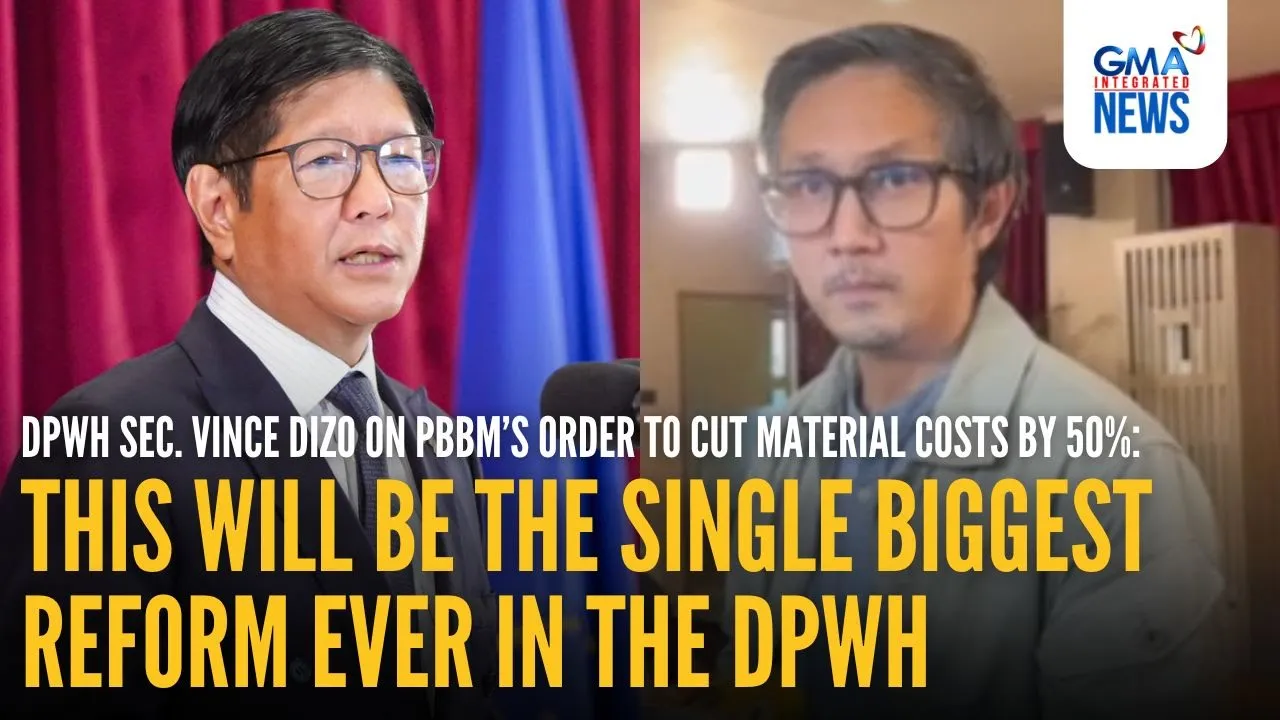
According to officials, the President’s message was clear: this isn’t about defending the DPWH — it’s about changing it. For too long, overpriced projects have drained public funds and eroded public trust. The President reportedly grew alarmed after reviewing data on material pricing that showed massive disparities between government and market rates.
“We have to reform and change the DPWH,” one senior official said. “What the President saw is not just inefficiency — it’s a long-running pattern of abuse in how materials are priced.”
Under the new directive, the DPWH has begun a comprehensive review and benchmarking of material prices across all its projects — from roads and bridges to classrooms and health centers. Early findings reportedly confirm the President’s concerns: many construction materials are significantly overpriced compared to prevailing market values.
The result of the review is expected to be released soon, but early indications suggest that price reductions of up to 50% are being targeted for implementation.
“This will be the single biggest reform in the DPWH,” the official emphasized. “If we can bring down the price of materials, we automatically bring down corruption. That’s automatic.”
The reform is not intended to stop with the DPWH. The same benchmarking approach may soon be applied to other agencies, including the Department of Transportation (DOTr) and other infrastructure-heavy departments.
“This is not just a DPWH issue,” said the spokesperson. “Overpricing happens in many areas of government spending. If we fix this here, we can set a standard for transparency and accountability across the bureaucracy.”
Experts say that material overpricing has long been one of the most common ways to siphon public funds. By inflating unit costs for items such as cement, steel, and asphalt, contractors and insiders can pocket huge profits under the guise of legitimate expenditures.
But lowering prices isn’t just about accounting — it’s about restoring trust. Every peso saved from unnecessary markups can be redirected to more classrooms, health centers, and roads where they’re truly needed.
Still, implementing this reform will not be easy. Some insiders warn that drastic cuts could be met with resistance from entrenched interests who benefit from the current system.
While many have praised the President’s move, some observers have expressed concerns about its feasibility and potential unintended consequences. Can construction projects maintain safety and durability if materials are purchased at much lower prices?
Officials assure the public that quality control will remain a top priority. “Lowering costs does not mean lowering standards,” said the spokesperson. “We will strengthen monitoring systems to ensure that every project meets safety and quality requirements.”
To prevent substandard or ghost projects, the government plans to tighten oversight and improve project auditing. The administration recognizes that corruption isn’t just in the pricing — it’s also in falsified reports and fraudulent implementation.
“These reforms must be done simultaneously,” the spokesperson explained. “Price reform is one step, but transparency and monitoring are equally essential.”
Beyond the numbers, the directive represents a shift in how government spending is viewed. The President’s message is not only about saving money — it’s about restoring discipline and honesty within public institutions.
By directly tackling the roots of overpricing, the administration hopes to change the culture that has normalized corruption in infrastructure. The move signals a renewed determination to ensure that every project funded by taxpayers truly serves the public good.
“This is about changing the old ways,” the official said. “We need to show that the government can build efficiently, transparently, and honestly — without unnecessary greed getting in the way.”
The coming weeks will be crucial as the DPWH prepares to release the official revised price benchmarks. Once implemented, all ongoing and future projects will be required to comply with the new pricing standards.
Observers are watching closely to see how the reform unfolds — and whether it will deliver on its ambitious promise of cutting corruption while ensuring quality public works.
If successful, this reform could reshape not only the DPWH but also the broader landscape of government infrastructure projects — transforming one of the country’s most criticized agencies into a model for efficiency and integrity.
For now, the message from the Palace is clear: it’s time to build with honesty — not greed.
News

Ang High-Tech na Mansyon ni Alden: Bakit Ang Dream House ng Aktor ay Literally Katabi ng Bahay ni Kathryn Bernardo
Ang mundo ng showbiz ay isang entablado kung saan ang pangarap ay nagsasaling-wika sa katotohanan, at ang pag-ibig ay madalas…

Araw ni Bonifacio 2025: Ang Trillion Peso March, Pagtawag ni Catriona Gray sa Pananagutan, at Ang “Under Control” na Gulo sa Mendiola
Ang Araw ni Bonifacio, na ginugunita tuwing Nobyembre 30, ay tradisyonal na ginagamit bilang plataporma ng sambayanan upang ipahayag ang…

Ang Laban ng mga Mana: Eman vs. Jimwel Pacquiao – Sino sa mga Anak ni Manny Ang Hahawak sa World Title ng Boxing
Sa mundo ng professional boxing, ang pangalan ni Manny “Pacman” Pacquiao ay hindi lamang isang apelyido; ito ay isang simbolo…

Ginto, Bilyong Insertions, at Ang ICC Drama: Ang Naglalagablab na Katotohanan sa Likod ng Marcos Administration’s Sekreto
Ang pulitika sa Pilipinas ay muling nagliliyab, hindi dahil sa isang kakaibang celebrity gossip, kundi dahil sa mga seryoso at…

Ang Second Life sa Kabaong: Paano ang Isang Pari, na Dating Combat Medic, ang Nagbunyag ng Drug Smuggling at Nagligtas ng Buhay sa Gitna ng Libing
Ang buhay ay madalas na punong-puno ng pagbabago, at ang paghahanap ng layunin ay kung minsan ay matatagpuan sa mga…

Ang No-Fail Test ng Kabutihan: Paano ang Helicopter Crash ang Nagbunyag sa Tunay na Ugali ng Kasintahan at mga Empleyado ng Bilyonaryo
Ang tunay na yaman ay hindi nasusukat sa dami ng ari-arian o sa bigat ng bank account; ito ay matatagpuan…
End of content
No more pages to load