For a few terrifying hours, Bollywood believed it had lost one of its greatest icons. Dharmendra — the man who defined an era of Indian cinema, the “He-Man” whose charm lit up generations — was trending worldwide for the worst reason imaginable. “RIP Dharmendra” flooded social media, sending shockwaves through fans, colleagues, and the film fraternity. But as the world mourned, something strange was happening inside the Deol household: absolute silence.
It began late on the night of November 10th, when whispers surfaced that Dharmendra had been rushed to Breach Candy Hospital in Mumbai after experiencing severe breathing difficulties. Within hours, unverified reports began to spread like wildfire. A few smaller news portals claimed he had passed away. Others copied and pasted the same story without confirmation, chasing clicks and outrage. Soon, hashtags like #RIPDharmendra and #LegendNeverDies trended across X and Instagram.
And yet — there was no official word. Not from Hema Malini, not from Esha Deol, not from Sunny or Bobby. The silence only fueled more speculation. “Why aren’t they saying anything?” one fan asked on Twitter. “If it’s not true, why aren’t they denying it?” The digital noise grew deafening.
Behind closed doors, however, the Deol family was fighting a different battle — one of fear, exhaustion, and heartbreak. According to a family insider quoted by The Times of India, Dharmendra had indeed been hospitalized but was “responding well to treatment.” The doctors were optimistic, and the family wanted to focus on his recovery rather than public hysteria. But the world outside refused to wait.
When the first wave of false obituaries began circulating, Hema Malini was reportedly in tears. She had lived her entire life in front of the camera — every smile, every scandal, every success — but nothing had prepared her for this. The woman once called “Dream Girl” of Indian cinema found herself facing the nightmare of seeing her husband “killed” by the internet.
By dawn, hundreds of fake posts had already racked up millions of views. Some TV channels even ran “tribute segments” using old footage. Several celebrities posted condolences — then deleted them after realizing the news was fake. The damage, however, was done.
Finally, by mid-morning, the Deol family broke their silence. Hema Malini tweeted:
“What is happening is unforgivable! Please stop spreading lies. My husband is alive and recovering. We request everyone to respect our privacy.”
Her words cut through the chaos. The post went viral instantly, drawing both relief and anger from fans. Many were furious that anyone could spread such cruelty. Others questioned why the family had waited so long to speak up.
But the answer, as sources close to the family revealed, was painfully simple: they were scared. “When you see your father in a hospital bed, you’re not thinking about Twitter,” said one person close to Esha Deol. “You’re thinking about his heartbeat, not hashtags.”
The story took another twist later that day when Sunny Deol’s team released an official statement confirming that Dharmendra had been discharged and was resting at home. The statement read:
“Dharmendra ji is recovering and responding well to treatment. The rumors circulating on social media are false and deeply hurtful to the family.”
By evening, photos emerged of a smiling Dharmendra waving from his car as he returned home — frail but very much alive. Fans across India erupted in joy. Messages flooded X: “Long live Dharmendra sir!”, “Never believe fake news again!”, “He’s our real-life hero.”
Yet, amid the relief, a deeper question lingered: Why did this happen at all?
The truth is, the digital world has turned death into breaking news — a race for engagement, for that first viral headline. When information moves faster than empathy, humanity becomes collateral damage. And in this case, it nearly broke one of India’s most beloved families.
Esha Deol later shared a quiet message on her Instagram story:
“Please don’t believe everything you read online. My father is strong and getting better. We are grateful for your love and prayers.”
It was a rare moment of vulnerability from a family known for keeping their emotions private. But it also reflected the exhaustion of living under constant scrutiny. For decades, Dharmendra had been the picture of strength — the action hero, the romantic lead, the doting father. To see him reduced to a trending topic was more than painful; it was dehumanizing.
A close friend of the family told Hindustan Times: “They didn’t hide his death. There was nothing to hide. They just didn’t want to share every medical update with the world. Sometimes silence is not secrecy — it’s dignity.”
And perhaps that’s the most important lesson from this entire episode. In an age where people demand instant answers, the Deol family reminded us that real life isn’t a live stream. Some moments — especially those involving life and death — deserve stillness, not speculation.
As of today, Dharmendra continues to rest and recover at his Mumbai home, surrounded by his children and grandchildren. His smile has returned, though he remains under observation. Hema Malini, as always, stands gracefully by his side — a symbol of strength in the face of chaos.
In her own quiet way, she summed up the family’s pain and resilience in one sentence during a brief interaction with the press:
“He is alive, and that is all that matters. Please let him live in peace.”
And with that, the noise began to fade. The false tributes stopped. The rumors died. But the moment left a scar — a reminder that behind every celebrity headline lies a human being, a family, and a fragile heartbeat the world almost forgot to respect.
It started with a whisper — then it became a roar. By the time the sun rose over Mumbai on November 11th, 2025, the name Dharmendra was everywhere. But not for a new film, not for a lifetime achievement award, and not for one of his timeless love songs. The world was saying goodbye to him — without even knowing if he was gone.
That morning, a thousand hearts broke in the span of a single scroll. On X, an account with thousands of followers posted, “Legendary actor Dharmendra passes away at 89.” No source. No confirmation. Just eight words that set off a digital earthquake. Within minutes, other accounts copied the tweet, adding emojis of heartbreak and candles. Television channels, desperate not to be the last to “break” the news, started calling “sources” and running tickers that read: “Unconfirmed reports suggest actor Dharmendra no more.”
It was chaos.
Across India, fans woke up to messages of condolence. Some wept. Some prayed. Others refused to believe it. “No, not Dharam ji,” wrote one fan from Punjab. “He was my childhood.” The flood of emotions was real, even if the news wasn’t.
In Juhu, inside the Deol residence, the family was in disbelief of a different kind. They weren’t mourning — they were fighting a storm of misinformation that had already taken on a life of its own. Esha Deol’s phone wouldn’t stop ringing. Sunny Deol’s manager was bombarded with calls from journalists demanding statements. Paparazzi gathered outside the house, cameras ready, waiting for confirmation of a tragedy that had never happened.
Inside, Dharmendra was awake — weak, recovering, but alive. When he saw his own death being discussed on television, he reportedly gave a faint smile. “They killed me already?” he whispered, half amused, half heartbroken.
The irony wasn’t lost on anyone. Dharmendra, the man who played the fearless hero in Sholay, Phool Aur Patthar, and Yaadon Ki Baaraat, had outlived villains, bullets, and cinematic heartbreaks — only to be declared dead by the internet.
Hema Malini, who had spent most of her life shielding him from the harsher glare of fame, felt something snap. For decades, she had learned to live with gossip — about their relationship, their marriage, their children. But this was different. This was cruel. “What is happening is unforgivable!” she wrote in her now-viral tweet. The words burned with a mix of anger and grief.
For hours, that tweet was the only truth in a sea of lies. It became a lifeline for fans who were desperate for clarity. Replies poured in — “Thank you, ma’am,” “We love him,” “God bless Dharmendra sir.” But the damage, as always, was done. The rumor had traveled farther than the correction ever could.
Bollywood veterans began speaking out. Actor Shatrughan Sinha told Times Now, “This is what our media has become — hungry for shock, careless about truth.” Others echoed his frustration. “If they can do this to Dharmendra ji, who’s next?”
By afternoon, the family decided to take control of the narrative. Sunny Deol’s PR team issued a formal press release confirming that Dharmendra was “recovering and responding to treatment.” They pleaded with the media to stop circulating false news and to allow the actor time to heal in peace.
Still, many couldn’t understand why the Deols had waited so long to respond. But those who know them best say it’s simply not in their nature to live online. “They’re old-school,” said a friend close to the family. “They believe in handling things privately. But the internet doesn’t work like that anymore — silence is treated as confirmation.”
And that’s the tragedy of modern fame: when you don’t speak, others speak for you.
The incident reignited an uncomfortable truth about the digital age — how misinformation has become entertainment. Every second, rumors are born, shared, and amplified by millions who never check where they came from. A single tweet can erase a lifetime. A trending hashtag can rewrite someone’s story before the truth even has time to wake up.
For Dharmendra, a man whose career was built on authenticity, this kind of death — digital, invisible, and viral — felt like the cruelest twist of fate.
Later that evening, a photograph appeared online: Dharmendra in the backseat of a car, smiling weakly as he waved to photographers outside his home. That one image became a symbol of resurrection — proof that the legend still breathed, still lived, still fought. The caption under one viral post read simply, “You can’t kill Dharam ji that easily.”
But while fans rejoiced, the family withdrew even further from public view. Hema Malini refused interviews. Esha Deol turned off her social media comments. For them, it wasn’t just about clearing a rumor — it was about reclaiming dignity. “People think celebrities belong to them,” said a close family friend. “They forget that even legends bleed.”
The story of Dharmendra’s “death” became a cautionary tale across India. News channels apologized. Influencers deleted posts. But the episode left behind a scar — a reminder that truth, once lost online, never fully recovers.
Even now, weeks later, the phrase “Dharmendra death hoax” continues to appear in searches. The lie refuses to die. Perhaps because in today’s world, drama lasts longer than facts.
As for Dharmendra, those close to him say he’s taking it all in stride. “He jokes about it sometimes,” said one friend. “He says, ‘At least now I know how many people will cry for me.’” But behind that humor is a quiet sadness — the realization that in the rush to go viral, the world nearly buried a man who taught it how to feel.
In the twilight of his years, Dharmendra has become more than a film star. He’s a mirror reflecting the best and worst of us — our love, our impatience, our need to believe everything we read. His story is a wake-up call, not just for the media, but for every one of us who has ever hit “share” without thinking.
Because sometimes, the click that spreads a lie can hurt more than the truth ever could.
And that day — the day the internet “killed” a legend — India learned that even heroes need protection from the stories we create about them.
When Dharmendra stepped out of the car that afternoon, a fragile but unmistakable smile lit up his face. Cameras flashed wildly, fans shouted his name, and for the first time in days, India exhaled in relief. The man they thought they had lost was standing right there — alive, gentle, gracious, and still radiating that warmth that made him the nation’s beloved “He-Man.”
It was November 12th, 2025. After a week of fear, confusion, and tears, the sight of Dharmendra waving to the crowd from his Juhu residence became more than just a photograph. It became a statement — one that said: truth outlives rumor, dignity outlives chaos, and legends never truly fade.
Inside his home, the mood was both emotional and peaceful. Hema Malini sat beside him, her hand resting lightly on his. For all the noise that had filled the outside world, the house was silent — a silence of gratitude. Esha Deol and Ahana Deol had returned home, quietly helping their mother care for him. Even Sunny and Bobby Deol, usually busy with their film commitments, had canceled meetings to be there.
It was, in many ways, a reunion born out of fear but sealed with love.
“Everyone wanted to be around him,” said a close family friend who visited that day. “They were scared, yes, but mostly they were thankful. It was like life had given them one more chance.”
Dharmendra, frail but alert, reportedly joked about the rumors. “At least now I know people still love me,” he told a visitor with a faint smile. That was his spirit — unbreakable, even when the world around him seemed to lose its sense of truth.
The internet that had once “killed” him was now overflowing with joy. Hashtags like #WelcomeBackDharmendra and #LongLiveLegend trended for hours. Fans across India lit candles not in mourning, but in celebration. One tweet captured the collective feeling perfectly: “You can’t bury light. It finds its way back.”
But behind those digital celebrations, the family remained quiet. Hema Malini posted one final update:
“He is home. He is smiling. Thank you all for your prayers. Let’s now give him the peace he deserves.”
Those few words felt like a soft curtain closing on a painful chapter — one that exposed both the fragility and the resilience of fame in the modern world.
Over the following days, as the frenzy faded, something remarkable began to happen. People started reflecting — not on the false news, but on the man himself.
Articles, retrospectives, and heartfelt tributes began to pour in, celebrating Dharmendra not as a trending topic, but as a timeless artist. Clips from his golden-era films resurfaced — his laughter in Chupke Chupke, his fiery dialogues in Sholay, his heartbreak in Satyakam. Younger fans, who knew him only as Sunny and Bobby’s father, discovered the sheer power of his legacy.
It was as if India had fallen in love with him all over again.
Film historian Meera Nair wrote in Filmfare:
“Dharmendra’s near-death hoax reminded us that he never truly left us. His presence lives on in the frames of our cinema, in the songs our parents hum, and in the warmth of every character who dared to love deeply and fearlessly.”
Meanwhile, inside his Juhu home, life returned to its gentle rhythm. Dharmendra began his daily walks again, supported by a caretaker, often greeting fans who gathered outside his gate. Some days, he’d pause, wave, and say softly, “Bas dua karte raho” — Keep praying for me.
And they did.
What remained most moving about this chapter wasn’t just his survival — it was the grace with which the family handled the storm. They could have lashed out at the media, filed cases, or gone public with anger. But they didn’t. Instead, they chose quiet strength. Hema Malini’s calm composure, Sunny Deol’s steady reassurance, and Esha’s gentle gratitude became lessons in how to protect what truly matters: love, dignity, and truth.
In one of her rare interviews after the incident, Hema Malini reflected:
“When you’ve shared a life with someone for so long, the thought of losing them — even falsely — shakes you. But it also teaches you something profound: that every day together is a blessing.”
Her words carried the weight of years — and a quiet wisdom that only love can teach.
Weeks passed, and Bollywood moved on to other headlines. But those who lived through the panic would never forget how fragile truth had felt for those few days. For journalists, it became a sobering reminder of responsibility. For fans, it was a wake-up call about believing before verifying.
And for Dharmendra, it was a poetic irony — that even in silence, he had moved an entire nation to feel something real again.
A few evenings later, as the sun dipped over the Arabian Sea, a reporter spotted him sitting on his balcony, wrapped in a shawl, watching the sky turn gold. When asked how he was doing, Dharmendra replied softly:
“Main theek hoon, bas thoda thak gaya hoon. Par dil abhi zinda hai.”
I’m fine, just a little tired. But my heart is still alive.
That single sentence said everything.
It wasn’t just the story of a man who survived a death hoax. It was the story of endurance, of faith, of the delicate line between fame and humanity. Dharmendra’s quiet survival reminded India of something it had almost forgotten — that behind every legendary face is a beating heart, vulnerable and real.
Today, as fans revisit his old films and share those famous lines from Sholay, the irony feels almost poetic:
“Tumhara naam kya hai, Basanti?”
That voice — deep, charismatic, unforgettable — still echoes across generations.
Because Dharmendra didn’t just make movies; he made memories.
And though the internet may have tried to bury him in rumors, he emerged stronger, a symbol of truth’s quiet victory over noise.
In the end, the legend still lives — not only in his films, not only in his family’s love, but in the millions of hearts that, for one fleeting moment, realized how much he meant to them.
As Hema Malini said it best, standing beside him with tears of relief and pride in her eyes:
“He came home. That’s all I ever prayed for.”
And with that, the story of Dharmendra — not his death, but his life — continues.
News
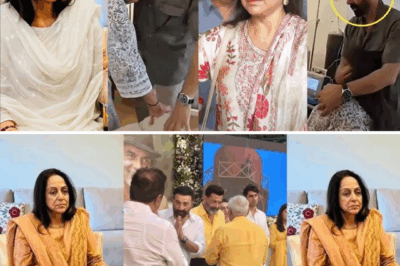
Hema Ji Breaks Silence After Dharmendra’s Passing: Social Media Reacts to Emotional Posts
The world paused for a moment when the news of Dharmendra’s passing spread. Bollywood’s “He-Man,” a figure larger than life,…
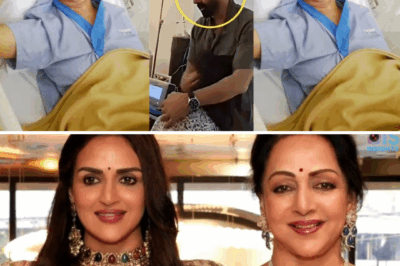
Hema Malini Health Rumors Rise After Dharmendra’s Hospital Scare: What’s Really Happening?
The first whispers came quietly, almost like a shadow sliding across the walls of social media. Hema Malini, the timeless…
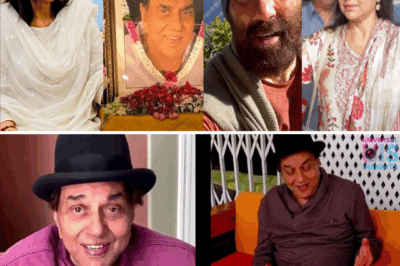
A Quiet Ritual, A Shattered Heart: What Really Stopped Hema Malini at Dharmendra’s Side?
Hema Malini had lived a life in the public eye for more than five decades, but nothing prepared her for…

Bigg Boss 19 Episode 100: Tanya Sparks Intense Fight With Gaurav
Bigg Boss 19 Episode 100, airing on 1st December 2025, marked a milestone not only because it was the 100th…
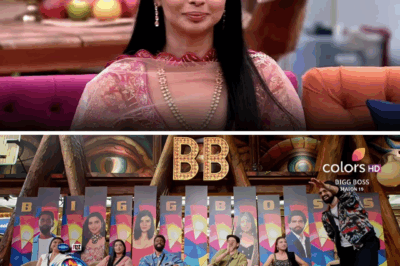
Bigg Boss 19 Promo 1st December 2025: Contestants Face Media Questions Live
Bigg Boss 19 reached a new milestone with Episode 100, airing on 1st December 2025, and fans were treated to…
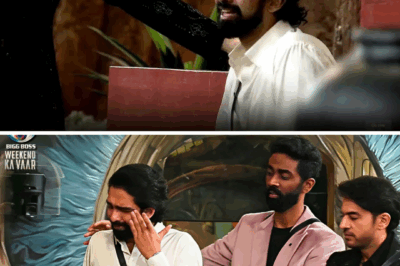
Bigg Boss 19 Drama: Amaal Malik Cries After Shehbaz Badesha Evicted
The Bigg Boss 19 house was filled with tension and anticipation as Shehbaz Badesha’s eviction was announced. While many contestants…
End of content
No more pages to load