
It was just another quiet morning in the bustling city of Mumbai when the news first broke, yet what unfolded in the hours that followed was nothing short of chaos. A shocking headline flashed across screens, social media feeds exploded with disbelief, and fans everywhere froze in disbelief. Dharmendra, the Evergreen Bollywood legend whose charisma had transcended generations, was reportedly dead. The words “Dharmendra passes away” seemed almost impossible to process. For decades, he had been an icon, a living embodiment of strength, charm, and the kind of cinematic heroism that no one could forget. And suddenly, it was all over—or so the world thought.
Within minutes, the news cascaded across platforms, each outlet competing to report, sometimes without verifying. Among them, the widely watched Aaj Tak channel ran the story, citing unnamed sources. The voice of Anjana Om Kashyap, delivering the grim news with a mixture of authority and urgency, carried across television screens. In households across India, viewers were glued, eyes wide, hearts racing. Some cried, others sat frozen in silence, and the younger generation, who grew up watching his films in reruns, shared disbelief across Twitter, Instagram, and WhatsApp groups. Memes were born in real time—some heartwarming tributes, others laced with shock, sadness, and humor as social media processed the news faster than any newsroom could.
But within hours, cracks began to appear. Dharmendra’s family, alarmed by the misreporting, took to social media to clarify the truth. “Our father is alive and recovering in hospital. The news of his death is false,” read a statement from Sunny Deol, his son, which immediately went viral. The very social media channels that had mourned him now had to recalibrate their posts, issuing corrections and clarifications. The news world, always hungry for the first scoop, had collided head-on with reality—and reality had won.
Yet the ripple effects did not stop there. Anjana Om Kashyap, the anchor who had presented the story to millions, found herself at the epicenter of the storm. Fans and critics alike expressed outrage, disappointment, and disbelief. Her social media handles were flooded with messages ranging from concern to harsh criticism. “How could you report this without confirmation?” asked one user. “People are mourning unnecessarily because of your broadcast,” wrote another. Yet amid the backlash, Anjana did something that few expected: she publicly shared the apology issued by the news channel, acknowledging the error and expressing regret.
“This incident has shaken me as well,” she wrote in a viral tweet, “and I sincerely apologize to the fans, the actor, and everyone affected. Appropriate measures have been taken to prevent such incidents in the future.” Her words, though sincere, did little to stem the tidal wave of social media reaction. Across platforms, users debated everything—from media responsibility to the fragility of public trust. Clips of Dharmendra smiling at a recent shoot resurfaced, viral memes celebrating his legacy spread like wildfire, and hashtags like #DharmendraAlive and #AnjanaOmKashyapTrend dominated timelines.
The surreal nature of the events made some question the boundary between reality and media dramatization. Celebrities, politicians, and even ordinary citizens joined the conversation. “This is why responsible journalism matters,” one tweet read. Meanwhile, fan groups organized “Dharmendra is alive” campaigns online, sharing childhood memories, film dialogues, and heartfelt tributes, creating a wave of collective emotion that was at once joyous and cathartic.
And then came the darker side: trolls and pranksters. Some users began creating fake images and videos, mocking the initial report, and in extreme cases, even turning the lens on Anjana herself. A viral video circulated showing a mock funeral procession with her image photoshopped onto it, meant as a form of “revenge” against the anchor for reporting the erroneous news. The intensity of social media reaction, with its blend of humor, anger, and disbelief, highlighted how deeply intertwined celebrity culture and digital communication had become. Every comment, share, and like became part of a sprawling narrative larger than the original news itself.
Despite the chaos, Dharmendra’s true admirers remained steadfast. Messages poured into his hospital, social media, and family channels, offering prayers, expressing relief, and celebrating his continued presence. The emotional journey was complex—grief turned to joy, anger to amusement, and confusion to clarity. It was a vivid demonstration of the power of a single erroneous report to touch millions of lives, and the equally powerful corrective force of truth.
By the evening, the story had evolved from a simple report to a cultural moment, dissected by news analysts, debated on talk shows, and memorialized in real-time on social media. Anjana Om Kashyap, while initially the focus of criticism, became part of the larger conversation about accountability, ethics, and the human cost of misinformation. Every apology, clarification, and public response contributed to a narrative that was no longer just about a single actor or anchor, but about the delicate balance between news, entertainment, and public perception.
In households, in offices, in cafes across the country, conversations revolved around one question: How could a false report ripple so far, so fast, and touch so many? And as fans revisited Dharmendra’s films, photos, and interviews, a deeper realization emerged: his legacy, built over decades, could never be diminished by a fleeting error. The truth, finally confirmed, restored peace—but the incident left a mark on media ethics, celebrity culture, and the collective digital consciousness of a nation.
The morning that began with heartbreak ended with relief, reflection, and an unspoken acknowledgment: in an age where news travels faster than truth, the responsibility carried by those who report it has never been greater. And for Anjana Om Kashyap, it was a lesson that would linger, a reminder of the thin line between breaking news and breaking trust.
As the sun rose the next day, the city was already buzzing with commentary, memes, and speculation. The Dharmendra death hoax had evolved into a digital wildfire, spreading far beyond India’s borders. Fans in Europe, North America, and Southeast Asia began expressing disbelief, disbelief transforming into relief as the truth emerged. Twitter threads stretched endlessly, with some users joking, “Guess Dharmendra really does have the Midas touch—he lives forever!” while others dissected every detail of the media misreporting.
The viral memes were relentless. One showed Dharmendra holding a cup of tea with the caption, “Still alive, still sipping, still legendary,” while another featured a recreated movie poster titled Dharmendra: Return of the Evergreen. Social media users, blending humor and admiration, demonstrated the unique power of celebrity culture in the digital age. Yet beneath the laughs, there was a lingering tension. Some questioned why such an iconic figure’s death could be reported without confirmation, sparking debates about journalistic responsibility and the perils of click-driven reporting.
Amid this storm, Anjana Om Kashyap found herself at a crossroads. The apology she had shared now seemed both necessary and insufficient. While many appreciated her transparency, trolls intensified their attacks, some mocking her personally, others accusing her of professional negligence. Private messages flooded her accounts—ranging from empathetic supporters to vitriolic critics. Each notification was a reminder of the fragile balance between public visibility and personal accountability.
In interviews, she maintained composure. “I deeply regret the error,” she said in one televised statement. “We live in a fast-paced news environment, and while speed is necessary, accuracy must never be compromised. I take full responsibility and will ensure such mistakes are not repeated.” Her words resonated with a portion of the audience, particularly those who recognized the human side of journalism. Yet for many, the digital echo of the hoax lingered—memes, re-shared clips, and endless tweets ensured that the story continued to dominate feeds for days.
International fans, too, were swept up in the saga. Bollywood enthusiasts in the United States, the UK, and Australia shared their disbelief, creating an almost surreal cultural feedback loop. Some even hosted informal “celebration streams” online, rewatching Dharmendra classics and posting clips with captions like, “Forever young, forever Dharmendra.” The actor’s legacy, it seemed, was impervious to misinformation. But the incident highlighted a new phenomenon: in the digital era, news and emotion are inseparable, and the global community participates in real time, reacting, amplifying, and sometimes distorting events beyond the origin country.
The impact on Anjana Om Kashyap’s professional reputation was equally complex. Media analysts dissected her role, debating whether the hoax represented an individual error or systemic issues in newsroom verification processes. Panel discussions on television explored the responsibilities of anchors in the age of instant news, while opinion columns examined how social media had magnified both mistake and apology. Despite the criticism, some industry insiders defended her, pointing out the structural pressures of modern broadcasting, tight deadlines, and the relentless pursuit of breaking news.
As the week progressed, the story transformed from a shocking incident to a case study in modern media dynamics. Universities and journalism programs began discussing the Dharmendra hoax as a textbook example: how a single erroneous report could catalyze global reaction, provoke viral humor, and place individual journalists under intense scrutiny. Simultaneously, the narrative reinforced the cultural significance of Dharmendra himself—a living legend whose presence inspired both affection and awe. Fans’ emotional investment in him became the lens through which every reaction was filtered, making the story not just about a media error, but about the relationship between celebrity, audience, and trust.
Social media metrics told a story of their own. Tweets mentioning Dharmendra surged into the millions, Instagram stories featuring throwback film clips went viral, and YouTube compilations of his greatest moments amassed hundreds of thousands of views within hours. Each post was a digital heartbeat, a pulse of public sentiment oscillating between humor, relief, nostalgia, and outrage. And in the middle of it all, Anjana Om Kashyap navigated a digital storm, balancing public accountability with personal resilience. Her apology, while already viral, was repurposed, analyzed, and debated—an enduring symbol of the precarious position journalists occupy in the social media age.
The lessons extended beyond a single actor or anchor. The Dharmendra hoax illuminated the complex interplay of speed, verification, and emotion in the 24-hour news cycle. It exposed the vulnerability of audiences to misinformation, the power of celebrity to mobilize mass reaction, and the challenges faced by journalists under intense scrutiny. Even as fans celebrated, trolls mocked, and analysts dissected, one truth remained immutable: Dharmendra himself continued to captivate hearts, unshaken by false reports or digital tumult.
By the time the weekend arrived, the media narrative had shifted. Coverage turned reflective rather than reactive. Commentators praised fans for their resilience, acknowledged Anjana’s transparency, and highlighted the broader implications for digital news culture. The story had transcended entertainment gossip—it had become a mirror reflecting the interconnectedness of media, public emotion, and celebrity culture. And through it all, Dharmendra’s enduring presence served as a reminder that no amount of misinformation could eclipse decades of legacy, love, and admiration.
As the days turned into weeks, the Dharmendra death hoax settled into the public consciousness not as a fleeting mistake, but as a landmark moment in modern Indian media. For Anjana Om Kashyap, the experience had been transformative. Initially caught in a storm of criticism, she had navigated an overwhelming wave of scrutiny that blended professional accountability with the very public, personal side of journalism. Every post, every interview, and every viral clip became a learning curve, a reminder that credibility and empathy must coexist in the modern news ecosystem.
In professional circles, the incident sparked introspection. Editors and news directors across India re-evaluated protocols for verifying reports, especially concerning sensitive topics like celebrity health or death. Workshops were conducted on fact-checking, responsible reporting, and the ethics of breaking news. Anjana herself participated in panel discussions and guest lectures, sharing firsthand insights into the pressures of anchoring under tight deadlines and the unforeseen consequences of misinformation. Her willingness to engage candidly with the issue earned her respect even among some of her harshest critics.
Social media, meanwhile, had evolved into a living archive of collective emotion. Fans continued to celebrate Dharmendra’s enduring legacy with creativity and passion. In the weeks following the hoax, fan-driven initiatives proliferated: hashtag campaigns like #ForeverDharmendra, tribute art on Instagram, and YouTube retrospectives of his most iconic performances. What had started as global disbelief and viral chaos transformed into a communal reaffirmation of admiration. Fans, across continents and generations, collectively decided that Dharmendra’s life and legacy were untouchable, immune to rumors and hoaxes alike.
The hoax also exposed the double-edged nature of online engagement. Trolls, pranksters, and meme-makers continued to push boundaries, sometimes personalizing attacks toward Anjana Om Kashyap. Yet this digital tumult highlighted a broader truth about media literacy: audiences were capable of both harm and healing. The same platforms that spread misinformation were also used to correct narratives, amplify apologies, and celebrate truth. It became clear that the role of a journalist in the 21st century was no longer limited to reporting facts—it involved navigating a complex web of public perception, emotion, and instantaneous feedback loops.
In interviews reflecting on the ordeal, Anjana Om Kashyap spoke not with defensiveness, but with a nuanced understanding of the media landscape. “The incident has taught me that speed cannot come at the cost of accuracy,” she said. “We are not just conveying information; we are shaping emotions, memories, and trust. Every word, every broadcast, carries weight beyond the studio walls.” Her words resonated deeply with young journalists and media students, offering a candid look into the balance of responsibility and humanity required in high-stakes reporting.
Meanwhile, Dharmendra’s presence continued to be celebrated worldwide. Film festivals honored his legacy, streaming platforms saw spikes in viewership of his classic films, and fan clubs organized online Q&A sessions revisiting his cinematic journey. The actor himself addressed the hoax with grace and humor during a live interview, saying, “I am still here, still enjoying life, and perhaps a little stronger because of all this attention!” His remarks humanized the saga, reinforcing the sense that while media missteps can cause ripples, true legacy is unshaken by transient chaos.
For Anjana Om Kashyap, the journey was both professional and personal. The hoax became a defining moment in her career—a reminder of the immense power, and potential peril, of modern broadcasting. While criticism had been intense, the subsequent dialogues, discussions, and reflections highlighted the capacity for growth and accountability. In embracing transparency, acknowledging error, and participating in conversations about media ethics, she emerged as a symbol of the nuanced responsibilities facing journalists today.
The public response, ultimately, was a testament to collective human emotion. From grief to relief, confusion to joy, outrage to celebration, audiences experienced a full spectrum of feelings over the course of the hoax. Social media captured it all: viral memes, heartfelt messages, fan tributes, and thoughtful commentary on the ethical dimensions of journalism. In an era where information travels faster than verification, this incident became a reminder of how deeply interconnected media, celebrity culture, and public sentiment have become.
As the weeks passed, a reflective calm settled over the saga. Media outlets issued follow-up pieces exploring lessons learned, fan groups returned to celebrating Dharmendra’s films, and Anjana Om Kashyap continued her work with renewed focus and clarity. The story had evolved from a shocking report into a cultural case study—a complex narrative intertwining fame, media responsibility, human emotion, and the undeniable power of digital communication.
In the end, the Dharmendra hoax was more than just a misreported death; it was a mirror reflecting modern society’s relationship with truth, celebrity, and the speed of information. It showed how emotions could be amplified, how accountability could be scrutinized, and how a single anchor, a single apology, and a single legendary actor could catalyze conversations spanning continents. For fans, it reinforced the timelessness of Dharmendra’s charisma. For journalists, it offered lessons in humility, accuracy, and empathy. And for everyone watching, it was a reminder that in the age of instant news, the human heart and mind remain the final arbiters of truth.
As the story finally settled into history, one truth remained undeniable: Dharmendra, the Evergreen Hero, was alive. His legacy untouched, his fans devoted, and the world reminded once again that legends do not die with false reports—they endure, they inspire, and they live on, unshaken by rumors and timeless in the hearts of those who admire them.
News
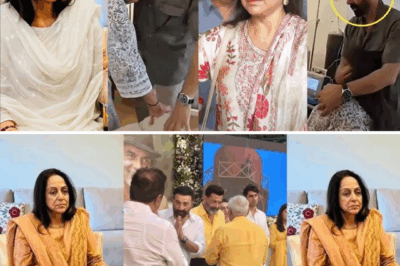
Hema Ji Breaks Silence After Dharmendra’s Passing: Social Media Reacts to Emotional Posts
The world paused for a moment when the news of Dharmendra’s passing spread. Bollywood’s “He-Man,” a figure larger than life,…

Hema Malini Health Rumors Rise After Dharmendra’s Hospital Scare: What’s Really Happening?
The first whispers came quietly, almost like a shadow sliding across the walls of social media. Hema Malini, the timeless…
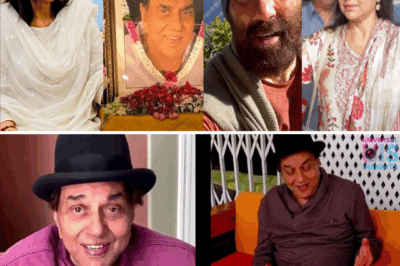
A Quiet Ritual, A Shattered Heart: What Really Stopped Hema Malini at Dharmendra’s Side?
Hema Malini had lived a life in the public eye for more than five decades, but nothing prepared her for…

Bigg Boss 19 Episode 100: Tanya Sparks Intense Fight With Gaurav
Bigg Boss 19 Episode 100, airing on 1st December 2025, marked a milestone not only because it was the 100th…
Bigg Boss 19 Promo 1st December 2025: Contestants Face Media Questions Live
Bigg Boss 19 reached a new milestone with Episode 100, airing on 1st December 2025, and fans were treated to…
Bigg Boss 19 Drama: Amaal Malik Cries After Shehbaz Badesha Evicted
The Bigg Boss 19 house was filled with tension and anticipation as Shehbaz Badesha’s eviction was announced. While many contestants…
End of content
No more pages to load