
The Great Reckoning: How President Marcos Turned a Scandal into a Systematic War on Corruption
For too long, the phrase “government project” has been synonymous with “scandal.” Public works, particularly those critical for disaster preparedness like flood control systems, have often served as notorious milking cows for the corrupt, lining the pockets of unscrupulous officials and contractors while leaving communities vulnerable to the very disasters the projects were meant to mitigate. The result is a toxic cycle of substandard infrastructure, wasted public funds, and a deep, corrosive erosion of public trust.
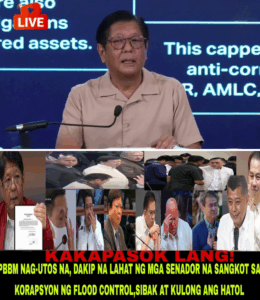
Now, however, the tide is turning. President Bongbong Marcos (PBBM), three months after his State of the Nation Address (SONA) where he first pledged an aggressive crackdown on these systemic anomalies, has delivered an unprecedented progress report that is less a routine briefing and more a declaration of digital and legal warfare against the perpetrators. The message is clear, emphatic, and carries the weight of impending justice: the days of impunity are over, and for the corrupt, there will be “Wala silang Merry Christmas before Christmas makukulong na sila” (“No Merry Christmas; before Christmas, they will be jailed”).
The Catalyst: Public Reports and Presidential Inspections
The scope of this investigation demonstrates a critical pivot in governance: empowering the citizens. Within two weeks of his SONA, the administration launched the ‘Sumbong sa Pangulo’ (Report to the President) website, a direct digital lifeline for citizens to report corruption straight to the top. The response was overwhelming.
“Mula noun nakatanggap na tayo ng na nakatanggap na yung sumbong sa Pangulo website ng more than 20,000 na report na ibinigay Kaya’t marami po sa ating mga naimbestigahan na ay hindi po namin malalaman kung hindi niyo sinumbong sa amin Napakahalaga ng impormasyon na ibinibigay ng taong bayan sa ating pamahalaan…”
This deluge of over 20,000 reports provided the crucial, ground-level intelligence needed to target specific anomalies. Backing up the digital data, President Marcos personally undertook inspections in August, traveling to Ilo-Ilo, Calumpit, and Baliwag. These visits provided tangible proof of the corruption, confirming the existence of “flood control project na hindi tinapos o ghost project talaga hindi man naumpisahan” (flood control projects that were not finished, or outright ghost projects that were never started). These on-the-ground discoveries became the cornerstone of the ongoing legal offensive.
The Legal Hammer: Cases, Seizures, and Fines
The President’s report meticulously details the staggering amount of legal activity undertaken by multiple government agencies—DPWH, the Ombudsman, DOJ, AMLC, BIR, and the newly formed Independent Commission for Infrastructure (ICI). This is a multi-pronged assault aimed not just at punishing the guilty, but at recovering every stolen peso.
1. Criminal and Administrative Charges:
The bulk of the effort has been focused on prosecution. The DPWH and the ICI have been relentlessly filing cases:
September 8: The DPWH referred complaints to the Ombudsman regarding irregularities in five projects, naming individuals like Henry Alcantara, Bryce Hernandez, JP Mendoza, and Paul Jason Sonduya, along with representatives from St. Timothy Construction, Wawa Builders, and Sims Construction Trading.
A Month After SONA: The DPWH filed cases against 20 DPWH officials from the Bulacan First District Engineering Office and five private individuals, including the Descaya couple, for violations of anti-graft, the Revised Penal Code, and the Government Procurement Reform Act.
September 29 to November 6: The ICI escalated its offensive, submitting criminal and administrative cases to the Ombudsman against 37 individuals connected to the anomalous projects, covering charges like graft, corruption, malversation, falsification, and plunder.
October 23: The DPWH filed cases against 21 DPWH officials from La Union and Davao Occidental District Engineering Offices, alongside four private individuals from companies like Silver Wolves Construction and St. Timothy Construction.
October 3 & November: The DPWH submitted bid manipulation and bid rigging cases to the Philippine Competition Commission (PCC) against several private companies, with the projected fines alone expected to recover “tatlo hanggang li bilyong” (3 to 5 billion) pesos.
2. Financial Recovery and Asset Seizure:
Crucially, the government is actively recovering the stolen wealth:
September 2: The Bureau of Customs (BOC) confiscated 13 luxury vehicles linked to the Descaya couple due to importation and documentation irregularities. These vehicles are slated for auction, with seven expected to be sold within the coming weeks.
September 15 to November 5: The Anti-Money Laundering Council (AMLC) secured seven freeze orders from the Court of Appeals, totaling a staggering P6.3 billion—money that is now subject to forfeiture proceedings and set to be returned to the public coffers.
November 6: The Bureau of Internal Revenue (BIR) filed 10 cases against DPWH officials and contractors for tax evasion and failure to file accurate information, identifying P8.86 billion in tax liabilities.
The Overhaul: Systemic Reforms and Smart Technology
Recognizing that prosecution alone is insufficient, the administration is pushing through massive systemic reforms to make future corruption virtually impossible.
1. Institutional Integrity: The new Independent Commission for Infrastructure (ICI) was established to relentlessly investigate all infrastructure projects, not just flood control, passing its findings directly to the DOJ and Ombudsman. Furthermore, a decisive move was made to eliminate the glaring conflict of interest in the accreditation process:
“pinagbawal natin na matibay na na mga may-ari ng construction company ay uupo ay maging miembro ng pickup board dahil maliwanag ng maliwanag pagka ikaw ay may construction company tapos ikaw nagbibigay ng accreditation lisensya sa mga constructor ay napakaliwanag ng conflict of interest kaya’t hindi na natin papayagan yan ulit…”
2. Transparency and Pricing Control: The DPWH has instituted a strict blacklisting policy for all contractors involved in “ghost” or substandard projects. They also issued a special circular on construction materials price data to counter overpricing, aiming for a reduction of up to 50% in project material costs by sticking strictly to market prices. A transparency portal is also under development to give the public access to project details, contractors, locations, and status, allowing citizens to monitor progress “every step of the way.”
3. The Rise of AI in Anti-Corruption: Perhaps the most forward-looking reform involves the introduction of cutting-edge technology:
“Meron tayong nakita na bagong smart technology na ginagamit na ang AI Ito ay titignan lang ang ang tinitignan niya yung yung AI tinitignan niya yung proseso nung kontrata at pagka pagka merong hindi tama ang takbo ng proseso ng kontrata ay magfa-flug yan… gagamitin natin lahat ng paraan na na nasa atin pati nga hanggang AI lahat ng smart technology na ating nakikita na lumalabas ay gagamitin natin lahat yan…”
This AI will scrutinize contract processes, flagging any irregularities immediately to prevent fraud long before it reaches completion stage—a massive leap from the current system of finding anomalies years after the money has disappeared.
The Final Warning: No One is Immune
During the Q&A, President Marcos addressed the urgency of the arrests and the question of political accountability. When asked by reporter Alvin Baltar when the public could expect jail time, PBBM did not hesitate: “Alam ko bago magpasko marami dito sa napangalanan dito ay palagay ko nasa nasa ano na matatapos na yung kaso nila Buo na yung kaso Makukulong na sila Wala silang Merry Christmas before Christmas makukulong na sila” (“I know before Christmas… the case will be complete. They will be jailed. No Merry Christmas before Christmas, they will be jailed”).
He also tackled the matter of former congressman Zalico, whose passport has not yet been canceled. PBBM explained the legal constraint, stating that passport cancellation must be based on grounds established by a filed case, but promised to act immediately once the case is filed.
Ultimately, the President’s commitment boils down to a fundamental assurance that justice will not be sacrificed for speed. The greatest fear, he said, is having a known guilty party escape due to a “legal technicality” or faulty evidence.
“Kaya tinitiyak namin na pagka kami ay sumampa ng kaso yang kasong yan ay hanggang sa dulo ay matibay ang kaso at kung sino man ang mga guilty ay sila naman talaga ay mananagot… sa bawat segundo na ating ibinibigay sa imbestigasyon tinitiyak natin na ang bawat kasong isasampalaban sa mga abusado ay may sapat na ebidensya at hindi hahantong sa pagbabasura ng kaso.”
He concluded with an unequivocal, definitive warning aimed at anyone who might think their status provides a shield: “Wala naman wala walang walang immune dito sa sa walang walang exempted dito sa mga imbestigasyon na ito” (“No one, no one is immune; no one is exempted from these investigations”).
The Marcos administration is aggressively pursuing a three-pronged strategy—prosecution, fund recovery, and reform—that promises not just punitive justice for the corrupt, but a fundamentally cleaner, more transparent, and tech-driven future for Philippine infrastructure. This is the moment the phrase “tapos na ang maliligaya ninyong araw Hahabulin na namin kayo” (“Your happy days are over, we will hunt you down”) transforms from a rhetorical flourish into a cold, hard promise of the state.
News

Ang High-Tech na Mansyon ni Alden: Bakit Ang Dream House ng Aktor ay Literally Katabi ng Bahay ni Kathryn Bernardo
Ang mundo ng showbiz ay isang entablado kung saan ang pangarap ay nagsasaling-wika sa katotohanan, at ang pag-ibig ay madalas…

Araw ni Bonifacio 2025: Ang Trillion Peso March, Pagtawag ni Catriona Gray sa Pananagutan, at Ang “Under Control” na Gulo sa Mendiola
Ang Araw ni Bonifacio, na ginugunita tuwing Nobyembre 30, ay tradisyonal na ginagamit bilang plataporma ng sambayanan upang ipahayag ang…

Ang Laban ng mga Mana: Eman vs. Jimwel Pacquiao – Sino sa mga Anak ni Manny Ang Hahawak sa World Title ng Boxing
Sa mundo ng professional boxing, ang pangalan ni Manny “Pacman” Pacquiao ay hindi lamang isang apelyido; ito ay isang simbolo…

Ginto, Bilyong Insertions, at Ang ICC Drama: Ang Naglalagablab na Katotohanan sa Likod ng Marcos Administration’s Sekreto
Ang pulitika sa Pilipinas ay muling nagliliyab, hindi dahil sa isang kakaibang celebrity gossip, kundi dahil sa mga seryoso at…

Ang Second Life sa Kabaong: Paano ang Isang Pari, na Dating Combat Medic, ang Nagbunyag ng Drug Smuggling at Nagligtas ng Buhay sa Gitna ng Libing
Ang buhay ay madalas na punong-puno ng pagbabago, at ang paghahanap ng layunin ay kung minsan ay matatagpuan sa mga…

Ang No-Fail Test ng Kabutihan: Paano ang Helicopter Crash ang Nagbunyag sa Tunay na Ugali ng Kasintahan at mga Empleyado ng Bilyonaryo
Ang tunay na yaman ay hindi nasusukat sa dami ng ari-arian o sa bigat ng bank account; ito ay matatagpuan…
End of content
No more pages to load