
Bigg Boss 19 has always been a crucible for emotions, alliances, and unrelenting pressures. Contestants walk into the house with their confidence and bravado intact, but day after day, small conflicts, heavy responsibilities, and strategic maneuvers chip away at their composure. For Mridul Tiwari, a YouTuber-turned-contender, the weight of leadership and interpersonal dynamics reached a tipping point that few anticipated. What unfolded was a raw, unfiltered display of human vulnerability — a breakdown that left housemates and viewers alike stunned.
As the captain of the house, Mridul was tasked with responsibilities that extended far beyond ordinary house chores. Every decision, every assignment, and every direction he gave carried a layer of accountability that was constantly scrutinized. Initially, he managed these pressures with the confidence of someone used to public attention, guiding housemates through tasks and mediating minor conflicts. But as days progressed, cracks began to appear beneath the surface. The constant tension, coupled with the resistance of some housemates, slowly eroded his patience.
The incident that triggered his emotional collapse happened during a group task. While most contestants approached it with a playful attitude, some refused to cooperate or follow the rules laid out by Mridul. The frustration accumulated silently at first, then boiled over in a series of exasperated comments. “I wake up, clean the garden, wash the utensils, I’m doing it all… and still feel unappreciated,” he admitted through tears. The simple acts of daily responsibility, amplified by constant observation, became a pressure cooker. The cameras captured every subtle tremor, every quiver of his voice, and the moment of human fragility.
Fans watching the broadcast were taken aback by the intensity of his breakdown. Unlike typical dramatic confrontations, this was not fueled by a sudden argument or impulsive reaction. It was a slow build-up of frustration, fatigue, and isolation, culminating in a very human display of vulnerability. Social media erupted with comments ranging from empathy to analysis, as viewers tried to parse what had gone wrong in the house to push Mridul to such an emotional edge.
Inside the house, reactions were mixed. Some contestants expressed sympathy, approaching him with cautious words and comforting gestures. Others seemed uncertain, caught between following the rules, maintaining their game strategies, and acknowledging the emotional weight of the situation. The uncertainty only added to the tension, revealing the psychological complexities inherent in a reality show environment. It became clear that in Bigg Boss 19, the game is as much about endurance and emotional resilience as it is about alliances or public votes.
Psychologists and social media commentators noted that Mridul’s collapse was emblematic of the extreme pressures that contestants face. Living under constant surveillance, subjected to both peer criticism and public scrutiny, can magnify even minor frustrations into emotional crises. Dr. Ananya Kapoor, a media psychologist, commented, “In reality shows, contestants’ coping mechanisms are constantly tested. Mridul’s breakdown is a natural human response to sustained stress, heightened expectations, and social dynamics. It’s a reminder that behind the entertainment, there’s a very real psychological toll.”
The emotional moment also shed light on Mridul’s personal resilience. Prior to the breakdown, he had shown remarkable composure, balancing leadership responsibilities while maintaining camaraderie with his fellow contestants. His emotional release did not indicate weakness; rather, it demonstrated the human cost of leadership in an intensely monitored environment. By openly showing his vulnerability, he became a figure of relatability, reminding audiences that behind every strategic move and confident smile lies the complex web of human emotion.
Fans quickly took to X and Instagram to express support, sending messages of encouragement and understanding. Many related to the pressures he was facing, drawing parallels with their own experiences of managing responsibilities and feeling unappreciated. Some comments even framed his breakdown as a wake-up call for reality shows: that contestants are not mere sources of entertainment but people with emotional depth and limits.
The breakdown also sparked discussions among housemates. Private conversations revealed a mix of guilt, concern, and strategic calculation. While some expressed regret over their behavior, others saw the emotional vulnerability as an opportunity to influence alliances and power dynamics. The complexity of these interactions highlighted the multi-layered nature of reality TV — where personal feelings, social strategy, and public perception constantly intersect.
For Mridul, the immediate aftermath was a mix of relief and apprehension. Letting out his emotions brought a cathartic release, yet it also exposed him to scrutiny. How would the housemates perceive him? Would this moment be leveraged against him in the game? Even in his private reflections, he questioned the balance between showing strength and admitting vulnerability. This internal conflict added depth to his narrative, making viewers invested not only in his gameplay but in his personal journey.
By the end of the episode, Mridul’s breakdown had become a defining moment in Bigg Boss 19. It went beyond the usual house drama, offering a raw and unfiltered look into the psychological pressures contestants endure. Social media buzzed with debate, empathy, and predictions, as audiences tried to anticipate how this moment would influence the game’s trajectory and interpersonal dynamics.
In essence, Mridul’s emotional collapse served as a powerful reminder of the human element behind the spectacle of reality TV. Leadership, loyalty, strategy, and emotional resilience collided, leaving an indelible impression on viewers and contestants alike. It was a moment that transcended entertainment, providing insight into the fragile balance between public performance and private emotion.
The moment Mridul Tiwari broke down did not just stay confined within the walls of the Bigg Boss 19 house. Once aired, it triggered a cascade of reactions from housemates, fans, and the wider audience. The social media storm was immediate, with clips of Mridul sobbing being shared across X, Instagram, and YouTube. Viewers were captivated by the raw display of emotion, expressing both empathy and curiosity about the underlying causes.
Inside the house, reactions were mixed, revealing the complex dynamics of a reality TV environment. Some contestants approached him with cautious empathy, trying to offer comfort without overstepping boundaries. They recognized the human cost behind his emotional display and expressed concern for his well-being. Others were unsure how to react, caught between strategic game play and genuine compassion. The hesitation reflected the dual reality of Bigg Boss 19: players must navigate both emotional integrity and competitive advantage.
For some housemates, Mridul’s vulnerability became a tactical consideration. In a house where alliances, loyalty, and perception are everything, showing weakness can influence how others treat you. Certain contestants, aware of the potential shift in house hierarchy, subtly adjusted their strategies, either by offering visible support to appear empathetic to viewers or by exploiting his emotional moment to strengthen their own positions. This interplay highlighted the delicate balance between personal connection and strategic gameplay that defines Bigg Boss.
The fan reaction outside the house was even more intense. Social media users quickly took Mridul’s side, expressing sympathy for his struggles as captain and frustration with housemates who resisted responsibilities. Posts ranged from emotional support — praising his patience and dedication — to sharp criticism aimed at housemates who failed to cooperate. The clip went viral, with hashtags like #SupportMridul and #BiggBossEmotions trending for days. Many viewers related to his situation, recalling moments when leadership and responsibility in their own lives felt unrecognized or undervalued.
Commentators and entertainment journalists added another layer to the discussion. Some highlighted the psychological pressure contestants face, noting that Mridul’s collapse was not an isolated incident but a reflection of the intense surveillance and expectations imposed on reality TV participants. “The cameras never turn off,” wrote one columnist. “Every task, every decision, every reaction is magnified. Mridul’s tears are a mirror of the human toll that underpins these shows.” Others analyzed the social dynamics, debating whether his housemates’ reactions were fair or indicative of deeper conflicts brewing within the group.
As the social media buzz grew, Mridul himself faced a new challenge: navigating public perception while continuing to play the game. He had to balance vulnerability with strength, showing viewers that he could handle pressure while maintaining authority in the house. His next moves, both in tasks and interactions with housemates, became closely scrutinized. Every word, gesture, or expression was dissected by fans, adding a layer of external pressure that intensified the psychological demands he faced.
The production team also played a role in shaping the narrative. By highlighting his emotional breakdown in promos and editing sequences, they framed it as a pivotal moment in the season, emphasizing the human stakes alongside the competitive drama. This editorial choice amplified the tension, turning Mridul’s personal struggle into a key storyline that dominated viewer discussion. While some argued it exploited his vulnerability for entertainment, others noted that it brought authenticity and emotional depth to the show.
Within the house, the aftermath of his breakdown affected interpersonal relationships. Housemates who previously disregarded his instructions became more cautious, aware that their behavior could have emotional consequences. The shift in dynamics subtly altered alliances and power balances, with some contestants seeking to mend relations while others reconsidered their strategies. Mridul’s leadership, once taken for granted, now carried a weight of moral authority reinforced by public support.
Fans outside the house also became invested in his narrative arc. Live tweets, Instagram discussions, and YouTube reactions dissected every aspect of the incident: the causes, his demeanor, his resilience, and how the house would respond. The conversation extended beyond entertainment, touching on broader themes of mental health, leadership challenges, and the human cost of high-pressure environments. Many viewers applauded Mridul for showing emotion, calling him relatable and genuine in contrast to the performative behavior often seen on reality television.
Psychologists and media experts weighed in, noting that the incident highlighted the importance of emotional intelligence in competitive settings. Mridul’s ability to openly express frustration and vulnerability demonstrated authenticity and self-awareness. It also provided a teachable moment for viewers, emphasizing that acknowledging feelings under pressure is a sign of strength, not weakness. The broader discourse sparked by his breakdown encouraged audiences to reflect on their own responses to stress and responsibility, bridging the gap between on-screen drama and real-life challenges.
The social media storm also pressured other housemates to reconsider their actions. Public opinion was overwhelmingly in Mridul’s favor, with audiences demanding accountability and respect for his role as captain. Contestants had to navigate this scrutiny carefully, balancing house strategy with external judgment. Their next interactions with Mridul were closely observed, adding a new layer of tension to the already high-stakes environment.
As days passed, the incident became a turning point in Bigg Boss 19. It was no longer just a breakdown; it evolved into a lens through which viewers understood the pressures of leadership, the fragility of human emotion, and the consequences of interpersonal neglect. Mridul’s moment of vulnerability transformed into a narrative about resilience, empathy, and strategic adaptation, influencing both the gameplay and audience perception.
Ultimately, Mridul Tiwari’s emotional collapse highlighted the human side of Bigg Boss 19. It reminded viewers that behind the entertainment lies real people with emotions, limitations, and the need for recognition. The combination of housemate reactions, public engagement, and media analysis made this a defining moment of the season — one that shaped alliances, influenced strategies, and resonated with millions of viewers.
Mridul Tiwari’s emotional breakdown in Bigg Boss 19 was more than just a fleeting moment of vulnerability; it became a defining event that shaped the season and left lasting impressions on viewers, contestants, and the narrative of reality television itself. The incident offered lessons on emotional resilience, leadership under pressure, and the responsibility of both participants and producers in high-stakes entertainment.
The first lesson is about humanizing reality TV contestants. Often, viewers see participants as strategic players, personalities, or entertainment fodder. Mridul’s collapse reminded everyone that behind the persona of a confident captain lies a real human being, vulnerable to fatigue, frustration, and emotional strain. By witnessing his breakdown, audiences were invited to empathize, to understand the emotional cost of leadership, and to reflect on their own interactions in daily life. It became clear that reality television, while dramatized for engagement, must still respect the emotional limits of its participants.
For Mridul, the incident had profound personal consequences. Although it exposed his vulnerabilities to millions of viewers, it also reinforced his authenticity and relatability. His openness about frustration and emotional strain earned him sympathy, loyalty, and support from the audience. Fans connected with him not as a character on a show, but as a person navigating responsibilities, disappointments, and isolation — emotions that are universal. This connection became a strategic advantage, turning a perceived weakness into a narrative of resilience.
The breakdown also had long-term implications for house dynamics. Housemates became more aware of the emotional realities of life under surveillance. The incident triggered subtle shifts in alliances, cooperation, and conflict management. Some contestants approached Mridul with caution and empathy, realizing that dismissive behavior could attract public criticism. Others reassessed strategies, balancing personal game plans with the optics of compassion. The emotional event effectively became a catalyst for social recalibration inside the Bigg Boss house, demonstrating that emotional intelligence can be as pivotal as tactical skill in reality TV.
On a broader societal level, the incident sparked conversations about mental health, stress management, and empathy. Social media and news outlets engaged in discussions about the psychological pressures of reality TV and the importance of supporting those in high-stress environments. Psychologists weighed in, noting that public vulnerability in controlled environments like Bigg Boss can encourage viewers to acknowledge their own emotional struggles and promote awareness of mental well-being. The incident also resonated with young audiences, highlighting that expressing emotions is natural and that seeking support is not a sign of weakness.
Another takeaway concerns the role of public perception and social media. In the age of instant reactions, every emotional display is scrutinized and shared widely. Mridul’s breakdown illustrated how quickly a moment can transcend its immediate context and become a cultural conversation. Fans debated, analyzed, and supported him in ways that influenced the narrative of the show, proving that audience engagement is a powerful force that can shape outcomes and influence the psychological atmosphere inside the house.
For producers and creators, the episode reinforced the importance of ethical responsibility in storytelling. Bigg Boss thrives on drama and conflict, but the incident reminded producers that contestants are real people with emotional boundaries. Editing, task design, and promotion must consider participants’ well-being alongside viewer engagement. Mridul’s breakdown underscored that ethical oversight is not optional but essential for sustainable and responsible reality TV production.
The episode also highlighted the delicate balance between vulnerability and strength. By showing emotion, Mridul did not undermine his authority; instead, he displayed courage, authenticity, and leadership under pressure. His breakdown served as a demonstration that acknowledging human limits can enhance respect, build trust, and inspire viewers. It challenged the stereotype that leaders must remain stoic, showing that vulnerability can coexist with authority and strategic acumen.
Moreover, the event sparked reflection on the responsibility of housemates. Contestants must navigate a competitive environment while considering the emotional impact of their actions. Mridul’s moment revealed how group dynamics, cooperation, and empathy intersect with strategy. It encouraged housemates and viewers alike to consider ethical behavior, kindness, and mutual respect as integral components of success, both inside and outside the game.
The public’s response further amplified the impact. Fans supported Mridul through social media campaigns, discussions, and engagement with content highlighting his resilience. This collective empathy became a form of social accountability, sending a message to both contestants and producers that audiences value emotional honesty and integrity. It demonstrated that reality television does not exist in isolation; its lessons ripple into culture, shaping perceptions of behavior, leadership, and human dignity.
In conclusion, Mridul Tiwari’s emotional breakdown was a turning point for Bigg Boss 19, transforming a personal crisis into a societal conversation about empathy, resilience, and the ethical dimensions of entertainment. It highlighted the psychological pressures faced by participants, the importance of audience empathy, and the need for ethical responsibility from producers and contestants. His tears, once perceived as weakness, ultimately became a symbol of strength, authenticity, and human connection, resonating with millions of viewers.
The incident stands as a testament to the power of emotional reality TV: it entertains, educates, and reminds us that behind the cameras are real people navigating the complexities of human emotion. Mridul’s journey encourages both participants and audiences to embrace vulnerability, uphold dignity, and recognize the profound impact of empathy — lessons that extend far beyond the Bigg Boss house and into everyday life.
Through this episode, Bigg Boss 19 proved that reality television is not just a competition; it is a lens into the human experience, where tears, frustration, and resilience intersect to create stories that are unforgettable, relatable, and deeply moving. Mridul Tiwari’s emotional collapse will be remembered not just as a dramatic moment on TV but as a cultural touchstone highlighting the enduring importance of compassion, leadership, and emotional truth.
News
Hema Ji Breaks Silence After Dharmendra’s Passing: Social Media Reacts to Emotional Posts
The world paused for a moment when the news of Dharmendra’s passing spread. Bollywood’s “He-Man,” a figure larger than life,…

Hema Malini Health Rumors Rise After Dharmendra’s Hospital Scare: What’s Really Happening?
The first whispers came quietly, almost like a shadow sliding across the walls of social media. Hema Malini, the timeless…
A Quiet Ritual, A Shattered Heart: What Really Stopped Hema Malini at Dharmendra’s Side?
Hema Malini had lived a life in the public eye for more than five decades, but nothing prepared her for…

Bigg Boss 19 Episode 100: Tanya Sparks Intense Fight With Gaurav
Bigg Boss 19 Episode 100, airing on 1st December 2025, marked a milestone not only because it was the 100th…

Bigg Boss 19 Promo 1st December 2025: Contestants Face Media Questions Live
Bigg Boss 19 reached a new milestone with Episode 100, airing on 1st December 2025, and fans were treated to…
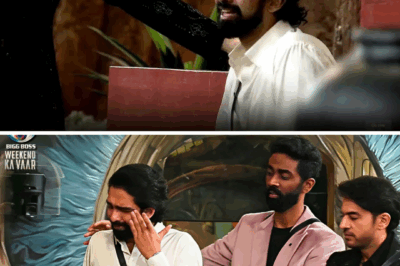
Bigg Boss 19 Drama: Amaal Malik Cries After Shehbaz Badesha Evicted
The Bigg Boss 19 house was filled with tension and anticipation as Shehbaz Badesha’s eviction was announced. While many contestants…
End of content
No more pages to load