
The political landscape in Manila is undergoing a violent tremor as a high-profile Senate investigation into massive infrastructure corruption has been blindsided by a devastating judicial ruling. What was intended as a decisive blow against political rivals has spectacularly backfired, threatening to expose a calculated scheme involving the use of forged documents to manipulate a national inquiry. At the center of this implosion is Senator Rodante Marcoleta, who now finds himself facing intense scrutiny following a Manila court’s confirmation that the affidavit presented by a key witness he championed was, in fact, a complete fabrication built on a forged signature.
This entire episode is a case study in how the pursuit of political advantage can quickly descend into reckless illegality. The controversy originates within the ongoing Senate Blue Ribbon Committee hearing into the multi-billion-peso flood control scandal, a probe that has already implicated numerous high-ranking officials and legislators in widespread corruption. In an effort to steer the narrative and discredit opposing factions, a witness named Orle Gotesa—a former security consultant for former Congressman Zaldy Co, who himself is entangled in the broader corruption allegations—was brought forward. Gotesa’s testimony was intended to provide a powerful, damaging account against political adversaries.
The political chess game was immediately complicated by the sharp investigative instinct of Senator Panfilo “Ping” Lacson, a figure known for his background as a former Philippine National Police (PNP) Chief. Lacson, recognizing the critical nature of the sworn testimony and perhaps sensing irregularities in its presentation, demanded a crucial verification: the authenticity of the notary public’s signature on Gotesa’s affidavit. That single decision proved to be the undoing of the entire political maneuver.

The judicial process, operating outside the political theater of the Senate, moved with cold, hard efficiency. The office of the Executive Judge of the Manila Regional Trial Court (RTC), specifically Branch 18, launched a meticulous investigation into the authenticity of the document. The subsequent findings, derived from an NBI (National Bureau of Investigation) forensics report, were nothing short of explosive: the signature of the Notary Public, Attorney Pech Rose Espera, was a forgery. It was a fake, confirming the testimony was built on a foundation of deliberate deception. The NBI’s detailed forensics report highlighted “material differences” between the genuine signature of Attorney Espera and the one affixed to Gotesa’s sworn statement, leaving no doubt that the document was falsified.
The implications of this ruling are massive, triggering a legal and ethical catastrophe for all parties involved in the affidavit’s presentation. The Manila RTC, having confirmed the forgery, immediately moved to recommend the filing of criminal charges against Orle Gotesa and, crucially, against “those responsible for presenting and using the document with the fake signature of the attorney.” This recommendation is a direct legal threat aimed at the political faction that brought Gotesa forward, primarily pointing towards Senator Marcoleta and his known political associates.
The legal jeopardy now facing Gotesa is severe, with the court recommending charges of falsification of a public document—a crime that carries significant prison time. However, the legal exposure extends far beyond the witness. Senator Marcoleta and any political operatives involved in orchestrating the presentation of the fraudulent affidavit could face charges ranging from perjury (due to the false testimony given under oath in a public inquiry) to obstruction of justice or even conspiracy to commit falsification. This episode transforms the narrative from one politician attacking another into a fundamental challenge to the integrity of the Senate’s investigative process itself.
The underlying question dominating political discourse is staggering: why would powerful individuals risk their careers and freedom by knowingly introducing a forged document into a major Senate inquiry? The motive, as widely speculated, was rooted in the aggressive, high-stakes nature of the political environment, where factions linked to the current corruption scandal are desperate to deflect scrutiny and damage political rivals. By attempting to present a seemingly authoritative witness with supposed insider knowledge, the goal was likely to bury genuine evidence under a fresh wave of fabricated testimony. The failure lies in the arrogance that assumed investigative integrity would be entirely absent from the process.
This case has also highlighted the often-forgotten, yet critical, role of forensic investigation and judicial oversight in maintaining political integrity. Senator Lacson’s insistence on authenticating the notary’s signature was the perfect example of how procedural diligence can act as a firewall against political fraud. The judicial branch, through the RTC’s meticulous confirmation and immediate criminal referral to the Department of Justice (DOJ) and the Ombudsman, has sent a clear message: the use of forgery to manipulate a state inquiry is a felony that will be aggressively prosecuted.
For Senator Marcoleta, whose political brand relies heavily on an image of being an uncompromising moral crusader, the implication of association with such blatant fraud is devastating. The scandal risks severely eroding his political capital and undermining his credibility on every issue he champions. The public, who often accepts testimony delivered on the floor of the Senate as truth, is now forced to confront the cynical reality of political warfare conducted through deception.
The judicial referral is now moving swiftly to the prosecutor’s office, where preliminary investigations into the falsification charges will commence. The legal strategy for Gotesa and those behind him will likely involve attempting to minimize the extent of knowledge regarding the forgery, perhaps pointing fingers at subordinates. However, the court’s recommendation is clear: the central figure and “those responsible” must be held accountable.
This entire episode serves as a sobering reminder that in the arena of high-stakes politics, corruption is often fought with equal parts genuine investigation and malicious deception. The implosion of the fake witness affidavit is a victory not for any political faction, but for the principle of truth itself, confirming that even the most elaborate political maneuvers can be defeated by a simple, verified signature. The nation watches now, awaiting the dramatic conclusion to a scandal that has exposed the disturbing lengths some politicians will go to in order to win the narrative, regardless of the ethical cost.
News
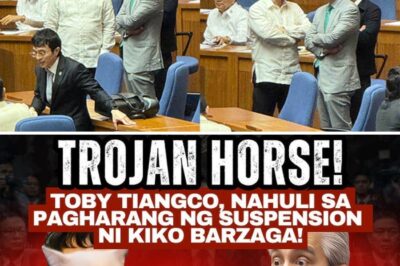
GULAT ANG LAHAT! Toby Tiangco, Huli sa Video na Nagtatangkang Harangin ang Suspensyon ni Kiko Barzaga – ‘Trojan Horse’ sa Kongreso Nabunyag?
Sa isang mainit na tagpo sa loob ng Batasang Pambansa na tila hinugot sa isang pelikula, isang hindi inaasahang “plot…
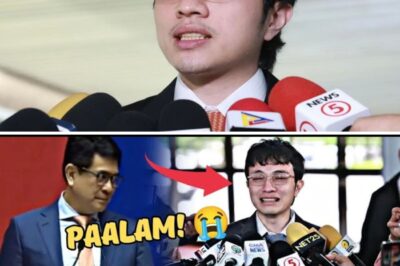
HINDI NA NAKAPALAG! Kiko Barzaga, Pinatayan ng Mikropono at Sinuspendi ng 60 Araw Matapos ang Matinding Harapan sa Kongreso Dahil sa ‘Fake News’
Sa isang mainit at dramatikong tagpo sa loob ng Batasang Pambansa, tuluyan nang ibinaba ang kamay na bakal laban…
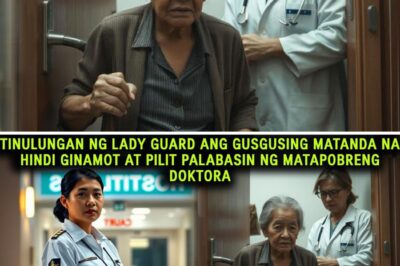
GUARD! KALADKARIN NIYO PALABAS ANG MATANDANG ‘YAN! ANG BAHO NIYA, NAKAKAHIYA SA MGA PASYENTE KO!
Napakalakas ng bagyo nang gabing iyon sa lungsod. Ang hangin ay humahagupit sa mga bintana ng St. Luke’s Medical City…
LUMAYAS KA RITO! ANG BAHO MO! WALA KANG PAMBAYAD KAYA WALA KANG KARAPATANG MAGPAGAMOT DITO!
Sa gitna ng abalang lungsod ng Makati, nakatayo ang St. Raphael Medical Center, isang ospital na kilala sa makabagong kagamitan,…
The Uncomfortable Truth Exposed: Why the World’s Wealthiest Nations Are Reportedly Laughing at the Philippines and the Shocking Reason Behind Their Sudden Loss of Respect for the Pearl of the Orient!
It is a bitter pill to swallow for every patriotic Filipino, but a disturbing narrative is quietly circulating within the…

ARGUS Touches Hearts on Showtime as He Emotionally Bids Farewell to His Father
Manila, Philippines — It was a tear-filled episode of It’s Showtime as young singing sensation Argus delivered one of the most emotional…
End of content
No more pages to load