
When a liquefied petroleum gas (LPG) tank starts leaking and a flame appears, most people instantly panic—visions of a sudden, fiery explosion flash through their minds. It’s a fear deeply rooted in every household, often amplified by dramatic scenes from action movies and viral social media posts. But here’s the truth: not every fire means an explosion is coming. In fact, the science behind LPG and how these tanks work might just surprise you—and even save lives.
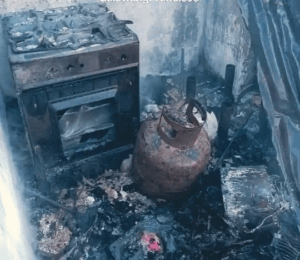
Fear vs. Fact: What Really Happens When an LPG Tank Leaks
The sight of fire licking the valve of a gas tank is terrifying—but according to safety experts, it’s not the tank itself that’s the problem. If a tank is well-maintained and structurally sound, it’s extremely unlikely to explode, even when flames are present near the valve.
LPG tanks are actually designed with a crucial safety feature: a pressure release valve. This valve is specifically built to release gas when internal pressure builds up too much. It prevents the tank from turning into a time bomb. What this means is that in most cases, if you see gas escaping and catching fire, it’s not necessarily the start of a catastrophe—it’s actually a sign the system is doing its job.
Even more surprising? The flames you see outside the valve don’t travel into the tank. LPG doesn’t pull fire inward. So unless the body of the tank itself is engulfed in flames for a prolonged period, it’s not going to blow.
What To Do If You See a Flaming Valve
If you ever find yourself face-to-face with a small fire on an LPG valve, don’t lose your head.
Here’s what experts recommend:
If the valve isn’t directly heated or damaged by the flames: Carefully and calmly turn off the valve. Cutting off the gas supply will stop the fire.
If the valve is already exposed to intense heat: Don’t rush in. Use a soaked towel, blanket, or thick cloth to carefully cover the valve area and lower the temperature. Once cooled enough, you can then turn off the valve.
The key is knowing when to approach and how. Rushing in blindly can cause more harm than good.
So Why Do Some Kitchens Still Blow Up?
Here’s the real danger: it’s not the LPG tank exploding—it’s the accumulation of gas in a closed space that causes the blast.
When gas escapes into a confined area like a cabinet or a small, poorly ventilated room, it can mix with oxygen. If that perfect balance is hit, even the tiniest spark—from a lighter, an electric switch, or static electricity—can trigger a powerful explosion.
It’s this trapped gas-air mixture that’s deadly—not the tank itself.
The Hidden Dangers: What Causes Real Risk
There are a few key causes of genuine risk involving LPG tanks:
Old, rusted, or corroded tanks – These can weaken over time and lose the ability to contain pressure properly, increasing the risk of sudden rupture.
Storing tanks in confined, unventilated spaces – Cabinets, cupboards, or enclosed corners trap leaking gas and raise the explosion risk.
Neglecting regular inspections and maintenance – Failing to check valves, rubber seals, or the tank’s condition can allow small problems to grow into dangerous ones.
Replace Panic with Knowledge
It’s normal to be afraid of fire and gas. But fear without understanding is what causes accidents. The more we know, the more confidently and safely we can act.
So the next time you see a viral video showing a flaming LPG tank, don’t let fear take over. Ask: is that tank rusty? Is it venting gas from the safety valve? Is the fire outside or inside?
Understanding how LPG systems work not only prevents panic—it can actually prevent tragedy.
Final Safety Reminders Every Household Should Follow:
Inspect LPG tanks every 2–5 years. Know when it was last refilled and check for rust or corrosion.
Never store LPG tanks in sealed cabinets or indoor corners with poor ventilation.
Keep water-soaked towels near cooking areas—it’s a quick, safe way to cover small flames.
Teach all family members (especially kids and elders) how to recognize leaks and respond calmly.
Never ignore a gas smell, but respond with information—not fear.
LPG is safe when respected and properly used. But it’s also unforgiving when neglected. Let’s choose preparation over panic, knowledge over assumption, and safety over fear.
News

GULAT ANG LAHAT! Toby Tiangco, Huli sa Video na Nagtatangkang Harangin ang Suspensyon ni Kiko Barzaga – ‘Trojan Horse’ sa Kongreso Nabunyag?
Sa isang mainit na tagpo sa loob ng Batasang Pambansa na tila hinugot sa isang pelikula, isang hindi inaasahang “plot…

HINDI NA NAKAPALAG! Kiko Barzaga, Pinatayan ng Mikropono at Sinuspendi ng 60 Araw Matapos ang Matinding Harapan sa Kongreso Dahil sa ‘Fake News’
Sa isang mainit at dramatikong tagpo sa loob ng Batasang Pambansa, tuluyan nang ibinaba ang kamay na bakal laban…

GUARD! KALADKARIN NIYO PALABAS ANG MATANDANG ‘YAN! ANG BAHO NIYA, NAKAKAHIYA SA MGA PASYENTE KO!
Napakalakas ng bagyo nang gabing iyon sa lungsod. Ang hangin ay humahagupit sa mga bintana ng St. Luke’s Medical City…

LUMAYAS KA RITO! ANG BAHO MO! WALA KANG PAMBAYAD KAYA WALA KANG KARAPATANG MAGPAGAMOT DITO!
Sa gitna ng abalang lungsod ng Makati, nakatayo ang St. Raphael Medical Center, isang ospital na kilala sa makabagong kagamitan,…

The Uncomfortable Truth Exposed: Why the World’s Wealthiest Nations Are Reportedly Laughing at the Philippines and the Shocking Reason Behind Their Sudden Loss of Respect for the Pearl of the Orient!
It is a bitter pill to swallow for every patriotic Filipino, but a disturbing narrative is quietly circulating within the…

ARGUS Touches Hearts on Showtime as He Emotionally Bids Farewell to His Father
Manila, Philippines — It was a tear-filled episode of It’s Showtime as young singing sensation Argus delivered one of the most emotional…
End of content
No more pages to load