
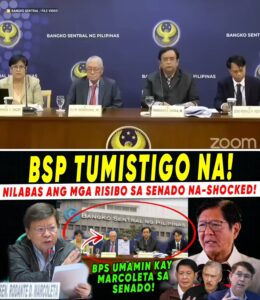
The halls of the Philippine Senate became the stage for a high-stakes economic inquiry that has captured the attention of the nation. In a budget hearing that quickly turned into a intense grilling session, Senator Rodante Marcoleta unleashed a series of probing questions directed at the Bangko Sentral ng Pilipinas (BSP) regarding the sale of a staggering 24.95 tons of gold in the previous year. This revelation, which had been circulating in financial whispers, was brought to the forefront of public discourse, raising critical questions about the country’s financial stability, the timing of asset disposal, and the overall health of the Philippine economy.
The Gold Reserve Controversy
At the heart of the debate is the sheer volume of gold disposed of by the BSP. Senator Marcoleta, citing data from an international brokerage tracking website, highlighted that the Philippines sold the largest volume of gold globally last year, amounting to nearly 25 tons. To put this into perspective, he compared it to neighboring countries: Thailand sold 9.64 tons, Uzbekistan sold 6.2 tons, and Singapore, a financial powerhouse, sold only 1.18 tons. This massive sell-off has reportedly reduced the country’s gold holdings to approximately 134 tons.
“Why did we sell so much?” Marcoleta demanded, voicing the concerns of many Filipinos who view gold not just as a commodity, but as a bedrock of financial security. He questioned the rationale behind such a significant reduction in reserves, especially when other nations were holding on to theirs.
BSP’s Defense: Portfolio Management
In response to the Senator’s barrage, BSP officials and economic managers defended the move as a standard part of “portfolio management.” They explained that the central bank periodically adjusts its assets based on risk and market conditions. The core argument was that the BSP capitalized on high gold prices to realize profits, shifting the funds into other “high-yield, low-risk” asset classes.
“We earned from this because the price of gold is high,” an official stated, attempting to assure the Senate that the transaction was beneficial. They clarified that the gold wasn’t sold in one bulk transaction but in tranches over time, allowing them to take advantage of upward price trends.
However, Marcoleta remained skeptical about the timing. He pointed out that gold prices have continued to soar, suggesting that had the BSP held onto the assets a little longer, the profits for the country could have been significantly higher. “If they had a wider foresight, we could have sold it when the price was even higher, yielding greater gain for the nation,” he argued.
The Sentimental and Economic Value of Gold
Beyond the cold calculus of finance, Marcoleta touched upon a cultural nerve. He likened the nation’s gold reserves to a family’s heirloom jewelry—something precious that provides security and isn’t easily parted with. “In Filipino families, when you have gold, you are very careful. You don’t just dispose of it. It’s security,” he remarked.
This sentiment resonates with the public, who are increasingly worried about the economic landscape. The Senator linked the gold sale to the broader financial context, noting that the Gross International Reserves (GIR) rely heavily on gold. He estimated that the gold sold represented a significant chunk of the reserves, potentially undervalued given current market rates.
The Weakening Peso and Economic Slowdown
The hearing didn’t stop at gold. The discussion inevitably pivoted to the precarious state of the Philippine peso, which was trading at nearly P59 to the US dollar at the time of the hearing. Marcoleta expressed alarm over the depreciation, noting a year-to-date drop of over 2%.
“I am not an economist, Mr. President, but we try to understand so we can explain to our constituents,” Marcoleta stated humbly yet firmly. He pressed the Department of Finance on their recovery trajectory, especially in light of a disappointing 4% GDP growth in the third quarter.
Officials admitted that government spending had slowed, partly due to the controversies surrounding flood control projects which halted construction activities. They acknowledged that public investment is a major driver of the economy, accounting for almost 25% of activity. To counter the slowdown, the administration unveiled a “catch-up plan” to aggressively utilize the remaining P156 billion in DPWH funds before the year ends.
Restoring Public Trust
The overarching theme of the hearing was trust. Economic managers emphasized that regaining the confidence of the people and investors is their top priority. They cited the Ombudsman’s filing of cases related to corruption scandals as a step toward accountability.
“Confidence building takes time,” an official noted. “But it is important that we take action now. Without action, no confidence will return.”
As the session concluded, the message was clear: the government is in a race against time to stabilize the economy. The sale of gold, while defended as a strategic financial maneuver, remains a contentious issue for a populace grappling with inflation and a weak currency. Senator Marcoleta’s questioning served as a reminder that in a democracy, even the most complex financial decisions must be transparent and justifiable to the people who ultimately bear the consequences.
The public now watches with bated breath. Will the catch-up plan work? Did the gold sale truly benefit the nation, or was it a premature move? Only time—and the fluctuating charts of the global economy—will tell.
News
GULAT ANG LAHAT! Toby Tiangco, Huli sa Video na Nagtatangkang Harangin ang Suspensyon ni Kiko Barzaga – ‘Trojan Horse’ sa Kongreso Nabunyag?
Sa isang mainit na tagpo sa loob ng Batasang Pambansa na tila hinugot sa isang pelikula, isang hindi inaasahang “plot…

HINDI NA NAKAPALAG! Kiko Barzaga, Pinatayan ng Mikropono at Sinuspendi ng 60 Araw Matapos ang Matinding Harapan sa Kongreso Dahil sa ‘Fake News’
Sa isang mainit at dramatikong tagpo sa loob ng Batasang Pambansa, tuluyan nang ibinaba ang kamay na bakal laban…

GUARD! KALADKARIN NIYO PALABAS ANG MATANDANG ‘YAN! ANG BAHO NIYA, NAKAKAHIYA SA MGA PASYENTE KO!
Napakalakas ng bagyo nang gabing iyon sa lungsod. Ang hangin ay humahagupit sa mga bintana ng St. Luke’s Medical City…

LUMAYAS KA RITO! ANG BAHO MO! WALA KANG PAMBAYAD KAYA WALA KANG KARAPATANG MAGPAGAMOT DITO!
Sa gitna ng abalang lungsod ng Makati, nakatayo ang St. Raphael Medical Center, isang ospital na kilala sa makabagong kagamitan,…
The Uncomfortable Truth Exposed: Why the World’s Wealthiest Nations Are Reportedly Laughing at the Philippines and the Shocking Reason Behind Their Sudden Loss of Respect for the Pearl of the Orient!
It is a bitter pill to swallow for every patriotic Filipino, but a disturbing narrative is quietly circulating within the…

ARGUS Touches Hearts on Showtime as He Emotionally Bids Farewell to His Father
Manila, Philippines — It was a tear-filled episode of It’s Showtime as young singing sensation Argus delivered one of the most emotional…
End of content
No more pages to load