
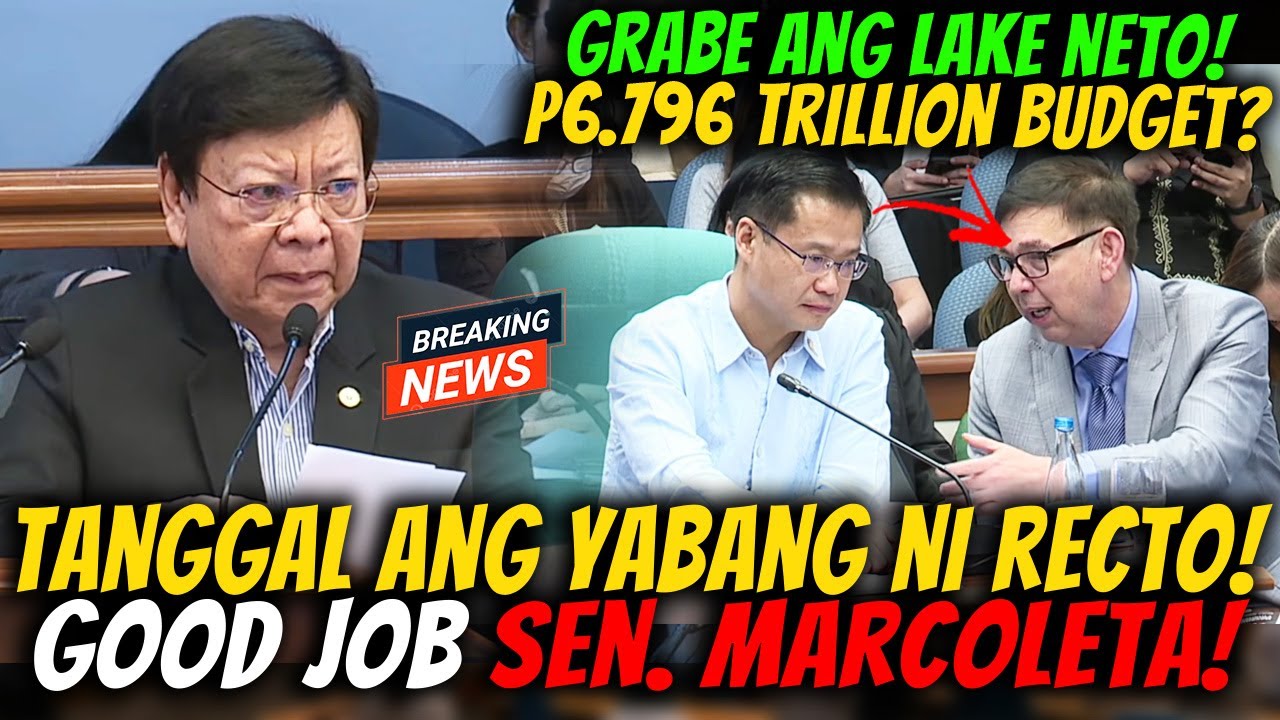
In a move that has sent shockwaves through the halls of government and into the homes of flood-weary citizens, Senator Rodante D. Marcoleta has launched a blistering investigation into what is being called one of the most extensive corruption scandals in recent history. As chairman of the Senate Blue Ribbon Committee, Marcoleta is spearheading a motu proprio inquiry titled “Philippines: Under Water,” aimed at unearthing the anomalies plaguing the country’s flood-control projects. The investigation has already brought to light staggering figures and disturbing allegations that suggest a systematic plunder of public funds meant to protect the populace from natural disasters.
At the heart of the inquiry is a staggering financial discrepancy. According to Marcoleta, between 2022 and 2025, a colossal P545.6 billion was allocated for 9,855 flood-control projects. However, in a revelation that defies statistical probability, approximately P100 billion of this budget was cornered by a mere 15 contractors. This concentration of wealth and responsibility in the hands of a few has raised immediate red flags about potential collusion and favoritism within the bidding process.
The Specter of ‘Ghost Projects’
The most damning accusation to emerge from the hearings is the existence of at least 60 suspected “ghost projects.” These are infrastructure endeavors that, according to Marcoleta, exist only on paper. They are either incompletely built, substandard to the point of uselessness, or in some egregious cases, completely non-existent. “Fraudulent reports,” Marcoleta termed them during a heated Blue Ribbon hearing, describing a scenario where documents claim progress while the ground reality shows nothing but empty promises.
The investigation has moved beyond mere paperwork to the physical quality of the construction itself. In a specific case involving a contractor in Calumpit, Bulacan, Marcoleta exposed what he described as a dangerous compromise on safety. He alleged that the embankment materials used were a pitiful mix of 80% soil, 15% cement, and only 5% steel—a recipe for disaster that virtually guarantees the structure will fail when it is needed most. For the Senator, this is not just corner-cutting; it is a clear indicator of kickbacks and corruption where the budget for quality materials is siphoned off into private pockets.
Collusion at the District Level
Marcoleta’s probe also shines a spotlight on the murky world of budget insertions. He asserted that the manipulation of funds does not merely happen during high-level bicameral conferences but begins much earlier, at the district level. He described a “collusion” between politicians and bureaucrats who allegedly engineer the budget to favor certain projects and contractors. This “college of power,” as he calls it, must be held accountable, emphasizing that liability stretches beyond the private contractors to the government officials who facilitate the release of these billions.
The inquiry has reportedly emboldened potential whistleblowers. Marcoleta revealed that several individuals, including contractors, have sent “feelers” expressing their willingness to testify. With information suggesting that some suspects may already be abroad, the Senator is exploring the issuance of lookout orders to prevent those responsible from evading justice, even as the committee navigates the legal limits of its power to issue hold departure orders.
A Call for Public Vigilance
“Don’t test us,” Marcoleta warned in his initial media briefing, signaling that the committee’s patience for evasive answers and bureaucratic stonewalling has run out. He demands “substantive answers, truthful answers, and concrete accountability.” His goal is ambitious: to publish a comprehensive list of all ghost projects and identify every individual liable under the General Appropriations Act.
However, the path to truth is not without its hurdles. Political friction has already surfaced, with Senator Panfilo “Ping” Lacson defending the scheduling of budget hearings, denying accusations that he is attempting to sideline Marcoleta’s investigation. Senator Francis “Chiz” Escudero has also weighed in, warning against “calculated diversions” that might distract the public from the core issues of corruption and substandard work. Meanwhile, Senator Imee Marcos has added another layer to the controversy, questioning the “trillions in debt” linked to these questionable projects and calling for greater transparency from the Unified Project Management Office (UPMO).
Senator Marcoleta has issued a rallying cry to the public, urging citizens to be active participants in the investigation. He calls on people to submit photos, documents, and information that can help verify the status of flood control projects in their areas. This participatory approach aims to crowdsource the truth, although the committee remains vigilant against verifying evidence to avoid “fake news” or AI-generated fabrications.
The Moral Imperative
Beyond the billions of pesos and the technical specifications, this investigation carries a heavy moral weight. It asks a fundamental question: why are the most vulnerable citizens—those living in low-lying, flood-prone areas—the ones paying the price for corruption? For Marcoleta, every substandard dike and every ghost project is a betrayal of the public trust that leaves families defenseless against the elements.
As the hearings continue, the nation watches with bated breath. The challenge is immense: can the Senate dismantle the entrenched networks of corruption? Can the system be reformed to prevent future theft? And ultimately, will there be true accountability for those who treated public safety as a business opportunity? This is not just an investigation; it is a battle for the integrity of governance and the safety of every Filipino.
News
GULAT ANG LAHAT! Toby Tiangco, Huli sa Video na Nagtatangkang Harangin ang Suspensyon ni Kiko Barzaga – ‘Trojan Horse’ sa Kongreso Nabunyag?
Sa isang mainit na tagpo sa loob ng Batasang Pambansa na tila hinugot sa isang pelikula, isang hindi inaasahang “plot…

HINDI NA NAKAPALAG! Kiko Barzaga, Pinatayan ng Mikropono at Sinuspendi ng 60 Araw Matapos ang Matinding Harapan sa Kongreso Dahil sa ‘Fake News’
Sa isang mainit at dramatikong tagpo sa loob ng Batasang Pambansa, tuluyan nang ibinaba ang kamay na bakal laban…

GUARD! KALADKARIN NIYO PALABAS ANG MATANDANG ‘YAN! ANG BAHO NIYA, NAKAKAHIYA SA MGA PASYENTE KO!
Napakalakas ng bagyo nang gabing iyon sa lungsod. Ang hangin ay humahagupit sa mga bintana ng St. Luke’s Medical City…

LUMAYAS KA RITO! ANG BAHO MO! WALA KANG PAMBAYAD KAYA WALA KANG KARAPATANG MAGPAGAMOT DITO!
Sa gitna ng abalang lungsod ng Makati, nakatayo ang St. Raphael Medical Center, isang ospital na kilala sa makabagong kagamitan,…

The Uncomfortable Truth Exposed: Why the World’s Wealthiest Nations Are Reportedly Laughing at the Philippines and the Shocking Reason Behind Their Sudden Loss of Respect for the Pearl of the Orient!
It is a bitter pill to swallow for every patriotic Filipino, but a disturbing narrative is quietly circulating within the…

ARGUS Touches Hearts on Showtime as He Emotionally Bids Farewell to His Father
Manila, Philippines — It was a tear-filled episode of It’s Showtime as young singing sensation Argus delivered one of the most emotional…
End of content
No more pages to load