

The nation is reeling from a political development of unprecedented gravity, a moment that observers are already calling the most decisive turning point in the country’s modern fight against institutional corruption. This week, the Independent Commission for Infrastructure (ICI) delivered its Interim Report and Recommendation No. 2025-002 directly to the Office of the Ombudsman, detailing a systematic and meticulously orchestrated scheme that allegedly siphoned billions of pesos from the public treasury. The shockwave is reverberating from the marble halls of the Senate down to the regional offices of the Department of Public Works and Highways (DPWH), as the report implicates several major political figures and former high-ranking government officials in a conspiracy that spans years.
The most jarring aspect of the ICI’s findings is the nature and magnitude of the alleged crime. Investigators did not uncover simple petty theft; they exposed a large-scale mechanism of betrayal tied directly to public safety. The report centers on mandatory flood control projects, vital pieces of infrastructure designed to protect communities, homes, and lives. According to the evidence—which includes detailed affidavits and corroborating testimony from former DPWH insiders, named in the report as Engineer Alcantara, Engineer Bruce Ericson Hernandez, and Engineer JP Mendoza—legislators allegedly acted as “project proponents,” exploiting their position to insert these flood control projects into the National Expenditure Program (NEP) and subsequently into the General Appropriations Act (GAA).
The price of this legislative maneuvering, the report alleges, was astonishingly steep: kickbacks ranging from a breathtaking 20% to 30% of the total project cost. This rate is substantially higher than typical institutional corruption norms, underscoring the audacity and greed driving the operation. These enormous payments were reportedly facilitated through a complex network involving DPWH engineers and cooperating private contractors, who worked in tandem to secure project awards, artificially inflate costs, and expedite the release of public funds. The consequence of this deeply rooted system was twofold: project costs were severely inflated, and the resulting infrastructure was implemented to devastatingly substandard levels. In essence, the alleged scheme not only diverted billions of pesos—money that should have built resilient communities—but actively endangered citizens by allowing shoddy, inadequate flood control structures to stand in the face of inevitable natural disasters.
The list of high-profile individuals implicated in the ICI report has sent the political world into a frenzy. Named among those facing the potential of long-term legal consequences are two sitting legislators: Senator Jinggoy Estrada and Senator Joel Villanueva. The report also flags former DPWH Secretary Roberto Bernardo, former Congressman Zaldy Co, and former Congressman Ms. Kahayon Uy, along with Commissioner Mario Lipana. For a nation long accustomed to the slow crawl of justice when it comes to high-level political figures, the swiftness and scope of this action are unprecedented. These names, once synonymous with power and public office, are now directly linked to serious charges, signaling a significant shift in the landscape of accountability.

In an accompanying public statement that was as uncompromising as the report itself, a representative for the ICI delivered a powerful declaration to the public. “No one will be spared in this fight against corruption. Politicians and government officials will be investigated and charged by credible evidence. Those found responsible will face the consequences and accountability under the rule of law.” The ICI’s promise—that “Justice will not be delayed this time”—is the statement that carries the most weight, setting a stark, new expectation for the speed and resolve of the country’s legal system. The era of investigations fading away into procedural obscurity, they suggest, is over.
The specifics of the alleged violations are extensive, citing breaches of key statutes designed to protect the public trust. The implicated participation appears to constitute violations of Articles 210, 212, and 220 of the Revised Penal Code, pertaining to corruption of public officers and unlawful transactions. Furthermore, the actions fall under Sections 3b and 3c of Republic Act No. 3019 (The Anti-Graft and Corrupt Practices Act). Given the staggering magnitude of public funds allegedly involved, the most severe consequence stems from Section 2 of Republic Act No. 7080, better known as the Plunder Law. Plunder charges, particularly involving amounts of this scale and the betrayal of public trust inherent in flood control projects, carry the severest penalties available under national law.
The reaction across the capital has been one of political and institutional paralysis. While some implicated officials, like Senator Villanueva and Senator Estrada, initially sought refuge behind weak statements citing the principle of due process, the concrete nature of the ICI’s evidence—the affidavits, the payment trails, the documented signatures—has largely silenced traditional political defenses. The former DPWH officials who cooperated and provided inside testimony are the unheralded heroes of this narrative, individuals who chose integrity over loyalty to a corrupted system, providing the foundational evidence needed to bridge the gap between suspicion and formal legal action.
The ICI report serves as a powerful testament to the axiom that corruption inevitably carries a human cost. The diversion of billions intended for flood control has a direct, tragic impact on the daily lives of citizens. In a country frequently battered by devastating weather, the alleged siphoning of a third of the budget for these vital structures means homes destroyed, livelihoods washed away, and families perpetually trapped in cycles of loss and recovery. The failure of a wall, the collapse of a dam, or the inadequacy of a drainage system is no longer simply an engineering failure; it is now potentially a documented result of institutionalized criminal activity.
This case is seen by many as a potential watershed moment for the nation, setting a precedent that no political office, regardless of its height, can shield individuals from the scrutiny of the law. The ICI’s filing marks not only the beginning of a massive legal battle but also the culmination of a deeply cynical era where the rule of political power often superseded the rule of law. The promised outcome—swift, uncompromising justice—is the hope to which millions are now clinging. As the Ombudsman begins its formal investigation into the Plunder charges, the question dominating the national conversation is stark and simple: Will this be the time when accountability truly prevails, leading to the long-term incarceration that the severity of these charges demands? The nation watches, demanding a reckoning for the alleged systematic betrayal of public safety and public trust.
News
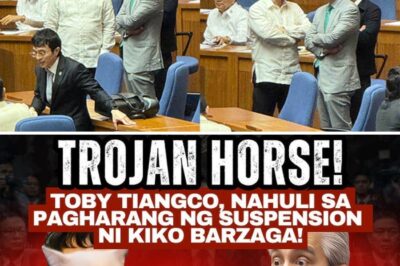
GULAT ANG LAHAT! Toby Tiangco, Huli sa Video na Nagtatangkang Harangin ang Suspensyon ni Kiko Barzaga – ‘Trojan Horse’ sa Kongreso Nabunyag?
Sa isang mainit na tagpo sa loob ng Batasang Pambansa na tila hinugot sa isang pelikula, isang hindi inaasahang “plot…

HINDI NA NAKAPALAG! Kiko Barzaga, Pinatayan ng Mikropono at Sinuspendi ng 60 Araw Matapos ang Matinding Harapan sa Kongreso Dahil sa ‘Fake News’
Sa isang mainit at dramatikong tagpo sa loob ng Batasang Pambansa, tuluyan nang ibinaba ang kamay na bakal laban…

GUARD! KALADKARIN NIYO PALABAS ANG MATANDANG ‘YAN! ANG BAHO NIYA, NAKAKAHIYA SA MGA PASYENTE KO!
Napakalakas ng bagyo nang gabing iyon sa lungsod. Ang hangin ay humahagupit sa mga bintana ng St. Luke’s Medical City…

LUMAYAS KA RITO! ANG BAHO MO! WALA KANG PAMBAYAD KAYA WALA KANG KARAPATANG MAGPAGAMOT DITO!
Sa gitna ng abalang lungsod ng Makati, nakatayo ang St. Raphael Medical Center, isang ospital na kilala sa makabagong kagamitan,…

The Uncomfortable Truth Exposed: Why the World’s Wealthiest Nations Are Reportedly Laughing at the Philippines and the Shocking Reason Behind Their Sudden Loss of Respect for the Pearl of the Orient!
It is a bitter pill to swallow for every patriotic Filipino, but a disturbing narrative is quietly circulating within the…

ARGUS Touches Hearts on Showtime as He Emotionally Bids Farewell to His Father
Manila, Philippines — It was a tear-filled episode of It’s Showtime as young singing sensation Argus delivered one of the most emotional…
End of content
No more pages to load